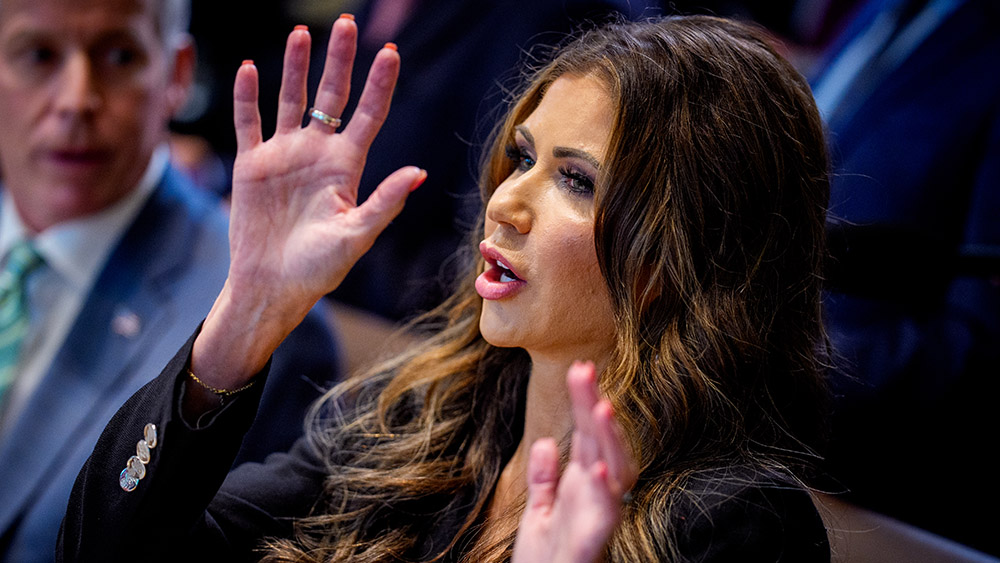
- DHS Secretary Kristi Noem revealed that staffers within her own agency installed spyware on government devices, enabling illegal surveillance of Trump administration officials.
- Tech experts, including Elon Musk, uncovered covert surveillance software on Noem's devices and identified a hidden Sensitive Compartmented Information Facility (SCIF) containing classified files kept off official records.
- Noem stated that entrenched bureaucrats actively sabotaged political appointees, admitting: "I never would have dreamed [the Deep State] was as bad as it is."
- The findings expose systemic vulnerabilities within DHS, raising concerns about unauthorized surveillance, internal espionage and deliberate obstruction by career officials.
- Noem vowed to root out misconduct, emphasizing the need for private-sector cybersecurity expertise and a return to government transparency under Trump's leadership.
Secret rooms and hidden files
Noem recounted how an employee accidentally discovered a secure room within DHS headquarters that had gone unnoticed. "We went in there, and there were individuals working there that had secret files that nobody knew about," she said. The files, which reportedly pertained to highly contentious subjects, were turned over to attorneys for investigation. The secretary suggested that the spyware was used to record private meetings, raising alarms about internal espionage targeting political appointees. "They had done that to several of the politicals," Noem said, referring to Trump administration officials. "If you didn't have those technology experts here in the department looking at all of our laptops and our phones… it would still be happening today." Noem credited Musk and his team with uncovering the surveillance, emphasizing the need for private-sector expertise in government cybersecurity. She lamented DHS's outdated technology, recalling that early in her tenure, she couldn't even email PowerPoint presentations longer than six pages due to system limitations.Broader concerns over Deep State influence
Noem framed the incident as part of a larger pattern of Deep State obstruction, alleging that entrenched bureaucrats have actively worked against the interests of elected officials. "I always believed when people talked about the Deep State before, that it existed," she said. "I never would have dreamed that it was as bad as it is." Her remarks echo long-standing conservative concerns about unelected officials undermining presidential administrations—a narrative that gained traction during Trump's presidency with controversies like the Russia investigation and the January 6 Capitol breach. Noem vowed to continue rooting out misconduct, stating that DHS under Trump's leadership would return to "the standard of excellence and behavior we expect our government agencies to function at."Implications for national security
The revelations come amid heightened scrutiny of government transparency and cybersecurity. Noem's claims suggest systemic vulnerabilities within DHS, raising questions about how deeply embedded surveillance and secrecy may be in federal agencies. Critics may dismiss Noem's allegations as politically charged, but the involvement of outside tech experts lends credibility to her assertions. If verified, the findings could prompt congressional inquiries into unauthorized surveillance and hidden records within DHS. Noem's disclosures underscore the ongoing tension between political leadership and career bureaucrats—a dynamic that has fueled debates over accountability in Washington. As investigations proceed, the full extent of the alleged misconduct—and who authorized it—remains to be seen. For now, Noem's message is clear: The battle against the Deep State is far from over. Watch the video below that talks about the Trump administration having arrested thousands of criminal migrants, according to Noem. This video is from the NewsClips channel on Brighteon.com.Sources include:
100PercentFedUp.com YouTube.com X.com AOL.com BrightU.ai Brighteon.com
Trump refuses to sign any legislation until Senate passes voter ID bill
By Cassie B. // Share

Deutsche Bank warns jet fuel spike is “existential threat” to global airlines
By Cassie B. // Share

Global Sulfur Crisis: The Chemical Achilles Heel of Modern Civilization Has Been Severed
By Mike Adams // Share
Amazon Prime Video Cuts Nearly 3,000 Employees, Citing Transition to ‘AI-First Development’
By Mike Adams // Share
We Are Programming Our Own Extermination: How War Teaches AI That Human Life is Disposable
By Mike Adams // Share
The 2027 Reckoning: Why I Believe Self-Aware AI Will Inevitably Decide We Are in the Way
By Mike Adams // Share

Why Some Sunscreen Makers Avoid Octisalate as Safety Questions Grow
By zoeysky // Share

Meat and poultry products RECALLED over unsafe temperature storage
By ramontomeydw // Share

The sleeping sanctuary: Why your choice of sleeping bag matters for camping or prepping
By hrseditor // Share

Iraq Detains Ukrainian Nationals Suspected in Plot Against Gulf Oil Facilities
By garrisonvance // Share