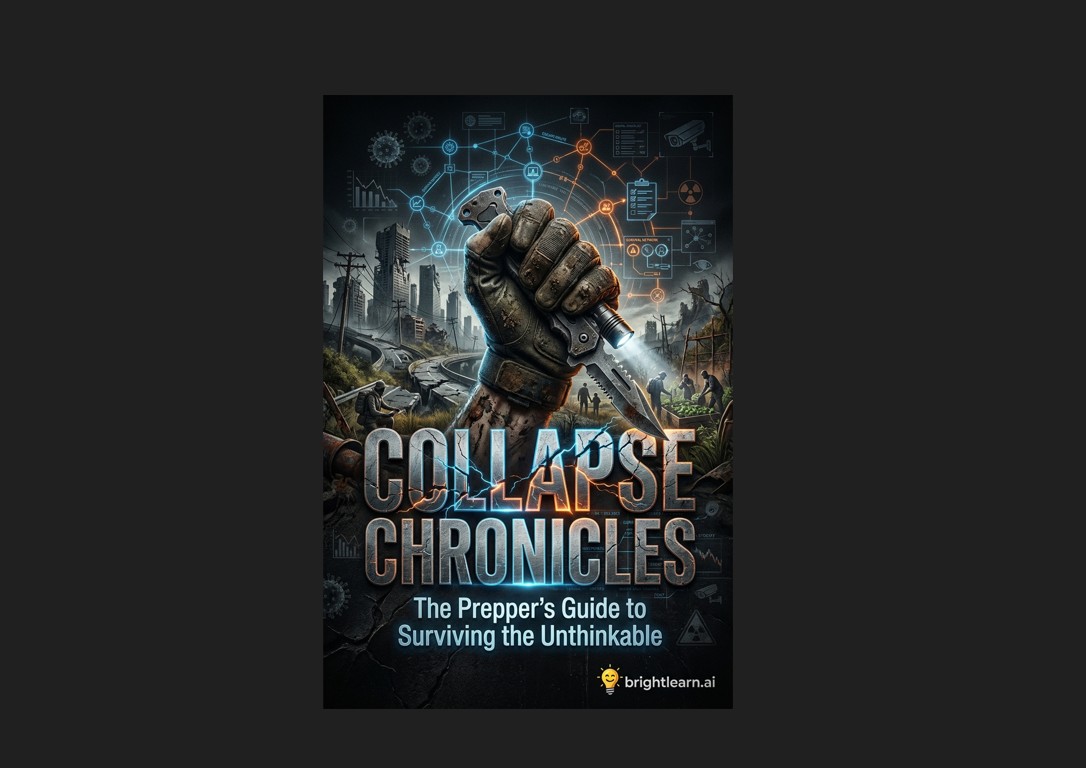
- "Collapse Chronicles" exposes vulnerabilities in centralized institutions (governments, banks, supply chains) and warns against relying on failing systems like FEMA or the CDC, citing historical collapses as proof.
- Survival hinges on practical knowledge (fire-making, water purification, herbal medicine) rather than hoarding gear—because "knowledge is the one resource no one can confiscate."
- Resilient groups (like the Amish) endure crises better than isolated individuals. The book emphasizes building mutual aid networks and local governance.
- With central banks debasing currencies, the book advocates for tangible assets (gold, silver, barterable goods) and warns against CBDCs as tools of control.
- Grid-down scenarios demand low-tech solutions (rocket stoves, Faraday cages) and mental fortitude. Techniques like meditation and community rituals are critical for long-term survival.
The fragility of modern systems
The book meticulously dissects the vulnerabilities of centralized institutions—governments, banks, Big Tech and global supply chains. It highlights historical collapses (Weimar Germany, Venezuela, the Bronze Age collapse) to illustrate how quickly societies unravel when trust in systems evaporates. One standout section critiques the illusion of safety offered by institutions like FEMA or the CDC, pointing to their failures during Katrina and COVID-19. The lesson? "Relying on the government in a crisis is a fatal mistake."Skills over stockpiles
While many prepping guides obsess over gear, "Collapse Chronicles" emphasizes skills as the ultimate currency. Fire-making, water purification, herbal medicine and mechanical repairs are more valuable than gold when supply chains collapse. The book includes practical drills to build competence, stressing that "knowledge is the one resource no one can confiscate."Community vs. lone wolf survival
A recurring theme is the myth of the isolated survivalist. History shows that resilient communities—not lone individuals—endure crises. The book outlines how to build mutual aid networks, establish local governance and vet trustworthy allies. One powerful example cites the Amish and indigenous tribes, whose decentralized, skill-based societies thrive without reliance on collapsing systems. The message is clear: "Your survival depends on your tribe."Economic collapse and honest money
With central banks debasing currencies and digital surveillance looming, the book advocates for tangible assets: gold, silver and barterable goods. It warns against CBDCs (Central Bank Digital Currencies) as tools of control and offers strategies for financial sovereignty.Low-tech resilience
In a grid-down scenario, high-tech solutions fail. The book champions low-tech alternatives—rocket stoves, hand pumps, Faraday cages—and stresses redundancy. "The more layers of backup you have, the harder it is for chaos to break you."Psychological resilience
Survival isn't just physical—it's mental. The book explores techniques to combat stress, trauma and group fragmentation. From meditation to community rituals, it underscores morale as a force multiplier. While the book leans heavily into skepticism of centralized power (a refreshing counter-narrative to mainstream dependency), some readers may find its dismissal of all institutions extreme. However, its core premise—prepare for the worst, hope for the best—is undeniably pragmatic. "Collapse Chronicles" is more than a survival manual—it's a wake-up call. In a world of engineered crises and elite predation, preparedness is the ultimate act of defiance. As the book concludes, "The globalists want you dependent. Don't give them the satisfaction." Grab a copy of "Collapse Chronicles: The Prepper's Guide to Surviving the Unthinkable" via this link. Read, share and download thousands of books for free at Books.BrightLearn.AI. You can also create your own books for free at BrightLearn.AI. Watch the video below, where Col. Drew Miller, founder of Fortitude Ranch, joins Mike Adams with a hard-hitting discussion of collapse, secession, civil war and survival. This video is from the Health Ranger Report channel on Brighteon.com.Sources include:
Books.BrightLearn.ai BrightLearn.ai Brighteon.com
Prepping before SHTF: The essential foods for any emergency stockpile
By HRS Editors // Share
Iran threatens “annihilation” of $30B AI data center, escalating tech infrastructure warfare
By Willow Tohi // Share
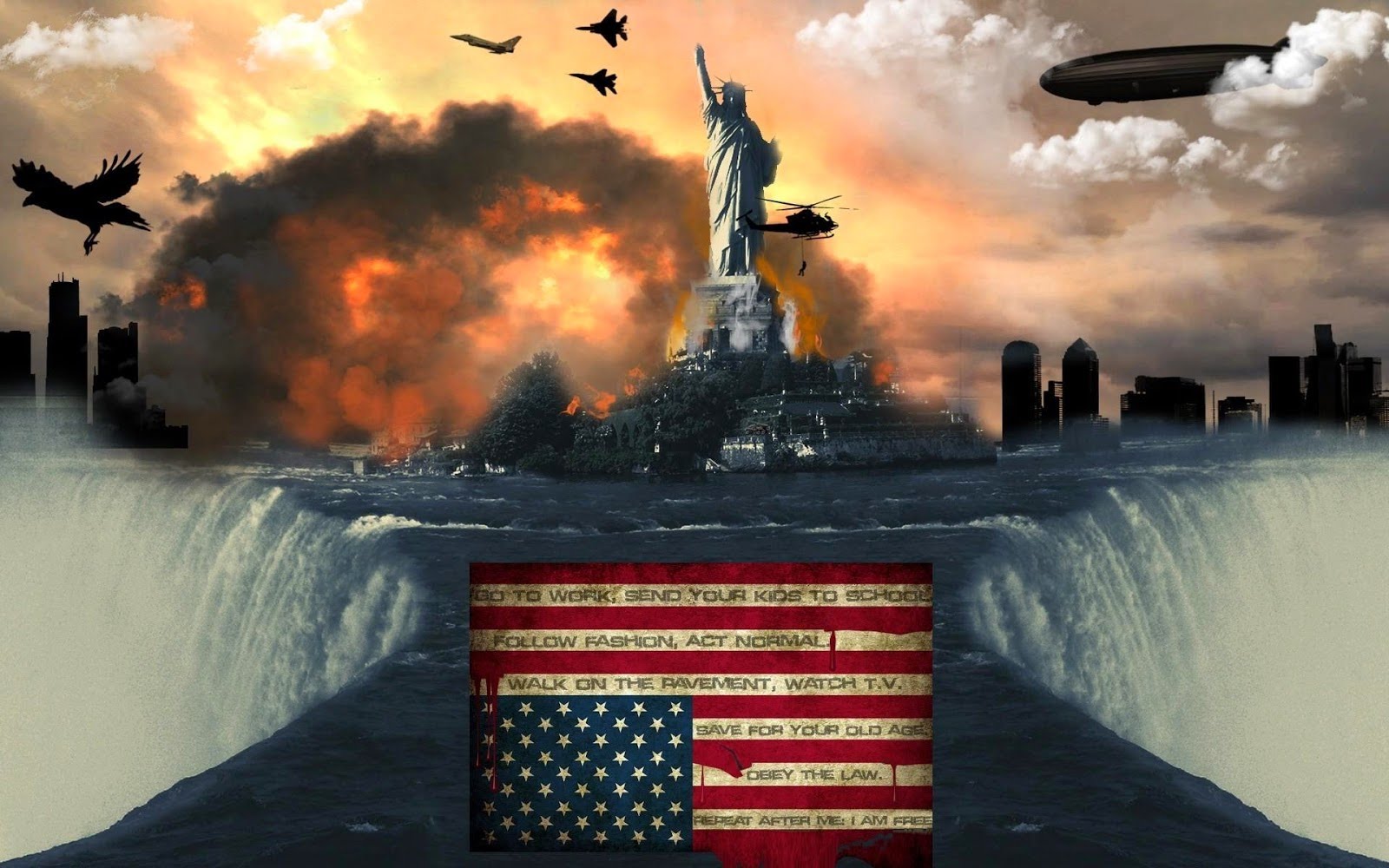
The Fourth Turning: Chaos, collapse and the elite’s accelerated agenda
By Patrick Lewis // Share

Last-ditch 45-day truce talks fail as Iran rejects US ceasefire demands
By Lance D Johnson // Share

Iranian Leader Warns of Prolonged Conflict Ahead of Trump Address
By Garrison Vance // Share

The inevitable surge: Why American electricity bills are set to climb higher
By Ava Grace // Share

U.S. Budget Deficit Surges to Nearly $2 Trillion, CBO Reports
By sterlingashworth // Share

Florida Seeks Court-Ordered Changes to Meta's Facebook and Instagram for Minors
By douglasharrington // Share

DOJ Argues Flock Safety Camera Data Is Not Protected by Fourth Amendment in Major Surveillance Case
By douglasharrington // Share

Protests Across EU States Focus on Housing, Education, Jobs and Conscription Plans
By garrisonvance // Share