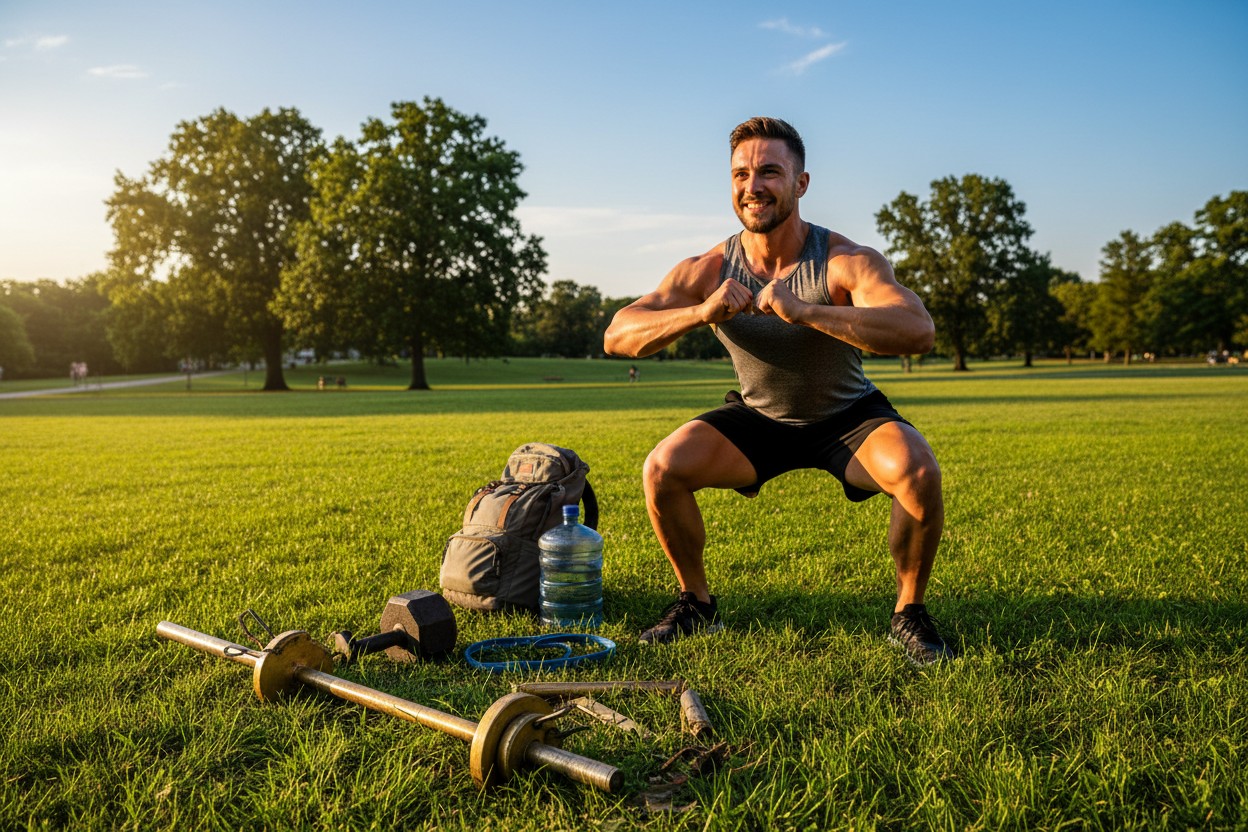
- The updated ACSM guidelines emphasize that simply showing up and maintaining a regular resistance training routine—whether using free weights, resistance bands or bodyweight exercises—yields better results than obsessing over the "perfect" workout.
- All forms of resistance training (kettlebells, machines, bodyweight exercises) effectively improve muscle strength, size and power. Exercise order, equipment type and rest periods have minimal impact on long-term results.
- Pushing muscles to exhaustion (failure) is not required for gains. Stopping with a few reps in reserve still produces results while reducing injury risk, especially for beginners or older adults.
- Meaningful benefits come from just two strength-training sessions per week, with recovery (sleep, nutrition, rest) being crucial for muscle repair and growth. Advanced lifters should allow at least 48 hours between sessions targeting the same muscle groups.
- The best program is the one that can be sustained long-term—focusing on consistency, proper form and recovery rather than extreme techniques or excessive frequency. The guidelines debunk fitness myths and encourage a practical, evidence-based approach.
The myth of the "perfect" workout debunked
One of the most liberating revelations in the new guidelines is that there's no single "right" way to strength train. Whether you prefer kettlebells, machines or bodyweight exercises like push-ups and squats, all forms of resistance training can improve muscle strength, size and power. "Many of the details people obsess over matter less than expected," Phillips noted. Factors like exercise order, equipment type and even rest periods between sets showed minimal impact on long-term results. Shane Davis, MD, a sports medicine physician at Tufts Medical Center, agreed, stating that beginners often overcomplicate workouts when the priority should be building a sustainable habit. This shift is particularly relevant today, as fitness trends flood social media with conflicting advice—from high-intensity "shred" programs to ultra-specific bodybuilding splits. The ACSM's findings suggest that what works best is whatever keeps people coming back. Another major misconception addressed in the guidelines is the belief that lifting to muscle failure—the point where you can't complete another rep—is essential for gains. The data found no consistent benefit to pushing muscles to exhaustion. "You do not need to push every set to the absolute limit to make progress," Phillips explained. Davis added that stopping with "a few reps left in the reserve" still produces results while reducing injury risk—especially for older adults or those new to lifting. This finding aligns with growing concerns about overtraining and improper form, which can lead to joint strain or cardiovascular stress. The guidelines caution against extreme fatigue techniques promoted by some influencers, reinforcing that controlled, moderate effort is enough.Two days a week is enough—recovery matters
One of the most practical takeaways? You only need two strength-training sessions per week to see meaningful benefits. This contradicts the gym culture mantra of "more is better," emphasizing instead that muscles need time to rebuild. "Doing seven days of bicep curls a week—it probably doesn't lead to nearly as good of gains as doing it less frequently with periods of rest," Davis said. Recovery—supported by sleep and nutrition—is when muscles repair and grow stronger. For advanced lifters, the guidelines recommend spacing out sessions targeting the same muscle groups by at least 48 hours. This approach minimizes overuse injuries while maximizing gains—a balance often overlooked in competitive fitness circles. The updated ACSM guidelines strip away unnecessary complexity, reinforcing that consistency, proper form and recovery matter far more than chasing extremes. Whether aiming for strength, hypertrophy or endurance, the best program is the one you can maintain long-term. As Phillips summarized, "People can get meaningful benefits from resistance training without overcomplicating things." In an era of fitness misinformation and fleeting trends, these evidence-based guidelines offer a refreshing return to basics—proving that sometimes, less really is more. For those hesitant to start strength training, the message is clear: just begin, stay steady and let science—not hype—guide your progress. Watch the video below that talks about why gym memberships aren't results-based. This video is from the Finding Genius Podcast channel on Brighteon.com.Sources include:
Health.com BrightU.ai Brighteon.com
Eggplant: The nutrient-packed superfood hiding in plain sight
By Evangelyn Rodriguez // Share

Kimchi probiotic can bind and remove dangerous nanoplastics from the gut
By Cassie B. // Share

Ancient herb meets modern lab: Lemongrass shows startling anti-cancer potential in studies
By Willow Tohi // Share

Paprika: The forgotten superfood that outshines Big Pharma’s toxic drugs
By Patrick Lewis // Share

The hidden crisis of zinc deficiency: Why vegetarians are at risk and how to fix it
By Patrick Lewis // Share

Ten Herbal Preparations Identified for Viral Infection Management
By Coco Somers // Share

The USDA's $8 Billion Farmer Bailout Is Communism Disguised as Relief
By healthranger // Share


Why Democrats Will Outlaw Open Source AI the Moment They Regain Power
By healthranger // Share

Could your sugar habit be reshaping your mouth's ecosystem?
By willowt // Share

Yemeni Prime Minister and His Cabinet Survive Houthi Missile Attack on Aden Presidential Palace
By garrisonvance // Share