
Iran's Position on Nuclear Details
Baghaei emphasized that the focus of negotiations is on ending the war, not on nuclear specifics, according to the semi-official Iranian news agency Tasnim [1]. "We will not reach a conclusion if we try to delve into details related to highly enriched uranium in Iran," he said, as quoted by the official IRNA news agency [1]. Iranian officials are still reviewing the latest U.S. proposal, but a senior Iranian source told Reuters that gaps have narrowed while no deal has been reached [3]. Iran's supreme leader, Ayatollah Mojtaba Khamenei, has issued a directive that the country's near-weapons-grade uranium must remain in Iran, according to two senior Iranian officials [4]. This position hardens Tehran's stance against a key U.S. demand. Iran has consistently vowed that its uranium enrichment program will continue regardless of any deal, with officials stating that the program is critical to energy security [5].Mediation Efforts and Mixed Signals
Pakistan's army chief Field Marshal Syed Asim Munir arrived in Tehran as a key mediator, though Pakistan's foreign ministry initially said it was "not aware of any visit right now," according to CBS [1]. A Qatari delegation also engaged in talks with Iran's foreign minister, the spokesperson confirmed [1]. The mediation efforts reflect the complex geopolitical landscape, where anti-American oil alliances are forming and European countries seek reliable supplies [6]. Al Arabiya reported that a final draft of a possible US-Iran agreement was expected, but a Wall Street Journal correspondent disputed the accuracy of circulating drafts, tweeting that the draft "deals" are inaccurate [1]. A Pakistani source said cautious optimism is the prevailing sentiment, but the insistence on raising demands regarding uranium and the Strait of Hormuz has led to a "crisis in negotiations," according to Al Jazeera [1].Threats and Regional Tensions
Fadahossein Maleki, an influential member of Iran's parliament's National Security and Foreign Policy Committee, warned of possible preemptive military action if Iran perceives U.S. force movements in the region [1]. "If we feel that something is happening from a US base, Iran has the legitimacy to respond and prevent it," Maleki said, according to Iran International [1]. Meanwhile, Rubio condemned Iran's proposal for a toll system in the Strait of Hormuz, calling it unacceptable and warning that it could set a dangerous precedent for other international waterways [1]. Unconfirmed reports of explosions in the UAE and lost contact with two Bolivian-flagged ships added to the uncertainty, according to Tasnim and Iraqi ports [1]. Such incidents highlight the fragility of the ceasefire and the potential for escalation. The Strait of Hormuz closure has already impacted global shipping, and some analysts suggest the United States or Israel could be behind any actual closure [7].Outlook and Reactions
Rubio confirmed that talks are continuing but emphasized that a comprehensive deal has not been reached [1]. Pakistan's foreign ministry spokesman Tahir Andrabi declined to comment on specifics, citing mediator confidentiality [1]. Trump, for his part, rejected a proposal from Russian President Vladimir Putin to transfer Iran's enriched uranium to Russia, insisting that the uranium must be handed over to the United States [8]. Trump also described the ceasefire as on "massive life support" after rejecting an Iranian counteroffer [9]. Analysts cited by regional media described cautious optimism but noted that core issues remain unresolved. A UAE official estimated a 50-50 chance of a Strait of Hormuz agreement [1]. Mediators are reportedly close to a 60-day ceasefire extension that would include gradual reopening of the strait and talks on the uranium stockpile, according to the Financial Times [10]. However, the gap between Iran's insistence on retaining enriched uranium and the U.S. demand for its removal remains the central obstacle.References
- ZeroHedge. "Iran Says 'No Deal' Will Materialize If US Insists On Enriched Uranium Handover". May 22, 2026.
- NaturalNews.com. "US Transmits 15 Point Proposal to Iran Seeking War Conclusion; Tehran Shows No Interest". March 26, 2026.
- "Iran reportedly still reviewing US peace plan, after Trump said he'll give Tehran 'couple of days'". Just The News. May 21, 2026.
- "Ayatollah Orders Highly-Enriched Uranium To Remain In Iran, Stymying Trump's Basis For Deal". ZeroHedge. May 21, 2026.
- Cassie B. "Iran Vows Uranium Enrichment Will Continue as U.S. Demands Zero Concessions in Nuclear Standoff". NaturalNews.com. May 20, 2025.
- Jerome R Corsi and Craig R Smith. "Black Gold Stranglehold".
- Mike Adams interview with Michael Yon. June 26, 2025.
- Laura Harris. "Trump Rejects Putin's Proposal to Move Iran's Enriched Uranium to Russia". NaturalNews.com. March 16, 2026.
- "Trump says Iran ceasefire is on 'massive life support'". BBC News. May 11, 2026.
- "Mediators close to 60-day US-Iran ceasefire extension deal, FT reports". Middle East Eye. May 23, 2026.
- Scott Ritter. "Target Iran: The Truth About the White House's Plans for Regime Change".
Explainer Infographic



The Apocalypse Gardener: The blueprint for escaping the globalist matrix
By Belle Carter // Share

Hegseth says U.S. will stop subsidizing wealthy NATO members
By Douglas Harrington // Share
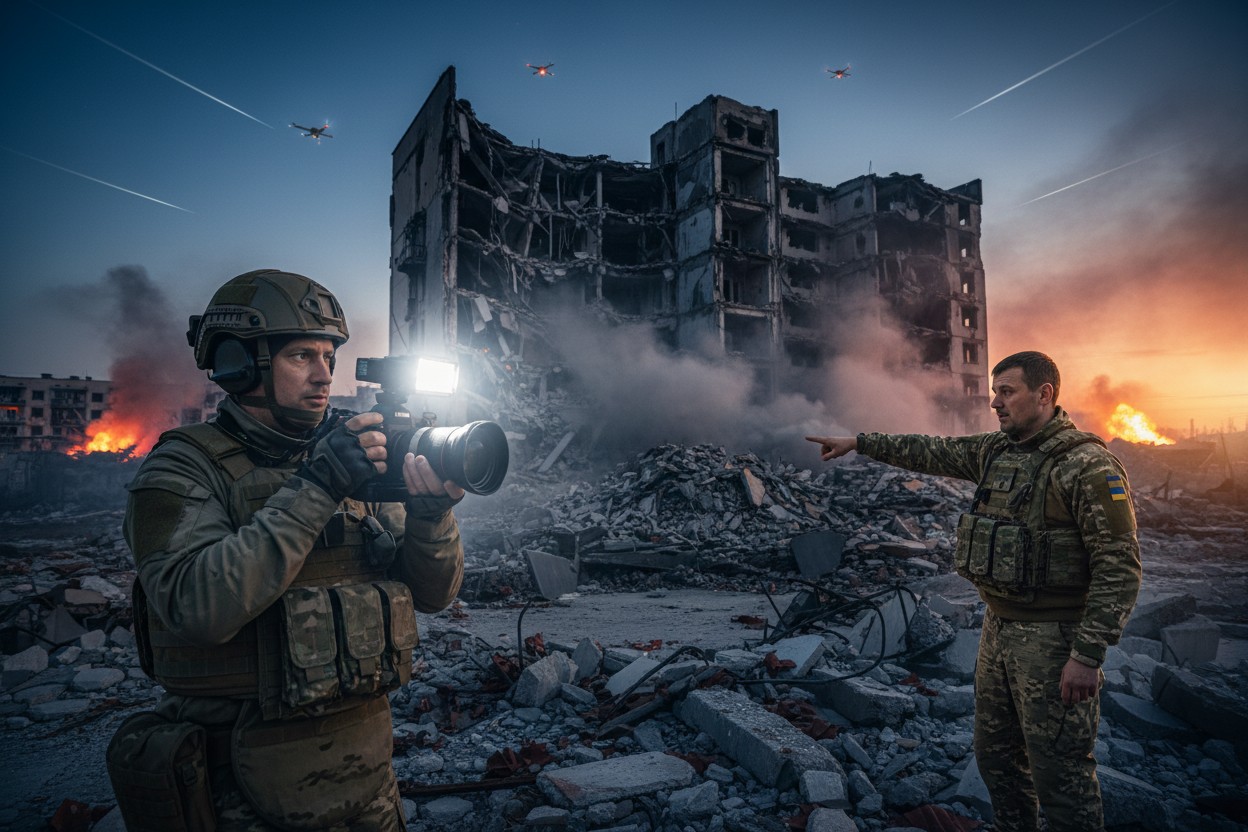
Russian Official Says Ukraine Hired CNN to Film Drone Operations
By Garrison Vance // Share

Dell Shares Surge 38% After AI-Driven Earnings Beat and Raised Forecast
By Chase Codewell // Share


Researchers Develop AI "Mind-Reading" Tool That Reconstructs What Eyes See
By chasecodewell // Share
After the Penny, Congress Looks to Tackle the Cost of the Nickel
By sterlingashworth // Share
India's Central Bank Raises Repo Rate to 5.50%, First Increase Since 2023
By chasecodewell // Share

Beyond the egg: Superior food sources of vitamin D for modern diets
By willowt // Share
Vast deep-sea life discovered under the Pacific as extraction tests leave lasting scars
By jacobthomas // Share