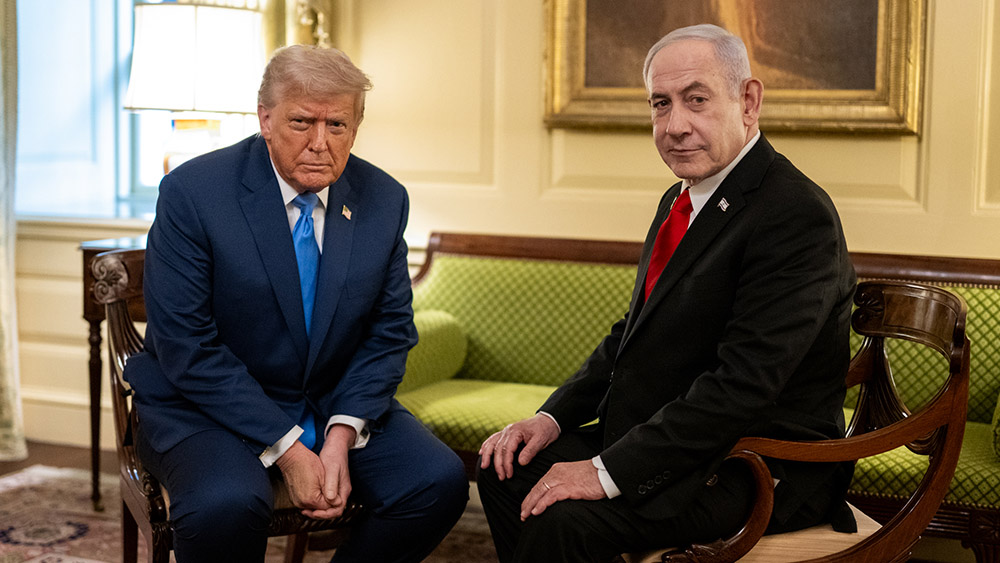
- The 2027 NDAA includes a provision to formally fuse U.S. and Israeli defense industries into a near-irreversible partnership.
- The proposal mandates cooperation across advanced technologies like AI, autonomous systems, and cyber defense.
- Critics warn the lock-in effect would make it politically and economically impossible for future presidents to distance from Israeli operations.
- Expanded co-production facilities in the U.S. would create jobs giving Israel powerful leverage over Congress.
- The provision could bind America's military permanently to a foreign power without meaningful public debate.
What the proposal actually does
Section 224 would require the U.S. defense secretary to appoint a single official responsible for coordinating military cooperation between the two countries. That official would synchronize efforts across "bilateral defence technology research, development, testing, evaluation, integration and industrial cooperation," according to the legislative text. The scope of technologies covered is breathtaking. The provision specifically targets artificial intelligence, quantum machine learning, autonomous systems, directed energy, cyber defense, electronic warfare, biotechnology, and biomanufacturing. It also proposes "network integration" and "data fusion" – which means American military data would effectively become Israeli military data. Josh Paul, a former U.S. Department of State official, warned that this gives Israel "incredible leverage over America's own defence priorities." He told Al Jazeera the intent is "finding different ways of entrenching the relationship so deep in America's own defence industrial base that it's impossible to root it out." The proposal comes at a time when American public support for unconditional military backing of Israel is fracturing. A New York Times poll found that only 30 percent of respondents believed President Trump made the right decision in ordering military strikes against Iran. An Institute for Global Affairs poll revealed that only 16 percent of Americans support continuing weapons transfers to Israel without additional restrictions. Yet the legislation, proposed by Republican chairman Mike Rogers and senior Democrat Adam Smith, has bipartisan committee support that could allow it to pass with minimal public debate.The lock-in effect
Analysts say this provision would transform the U.S.-Israel relationship from one based on aid and commercial contracting into structural integration that would survive changes in administration. Mark Hilborne, a senior lecturer at King's College London, explained to Al Jazeera that "some of the development cycles could be very long and would become entrenched." This "lock-in" would make it politically and economically difficult for future presidents to distance the United States from Israeli military operations. Co-production facilities in Mississippi and Arkansas would create American jobs tied directly to the Israeli defense industry, giving the Israeli government a powerful lever of influence in Congress.Economic consequences for taxpayers
Responsible Statecraft reported that the provision would "give the Israeli government the opportunity to greatly expand one of the most powerful levers of influence in US politics: jobs in the US." By expanding co-production facilities, Israel could "secure allies among members of Congress who represent the districts where those jobs lie." The United States has already contributed an inflation-adjusted $200 billion in military assistance to Israel since 1948. Section 224 would lock future generations of American taxpayers into the permanent defense of a foreign nation, with little ability to reconsider the arrangement.The regional implications
Imad Salamey, an international relations professor at the Lebanese American University, told Al Jazeera the proposal "can be seen as the next phase of the Abraham Accords: moving from normalisation toward a US-backed regional security regime centred on Israel as the dominant military and technological hub." For Lebanon and Gaza, this could mean "greater pressure to accommodate Israeli-led security arrangements." The integration of U.S. technology into Israeli forces operating in Palestinian territories raises concerns about surveillance, autonomous weapons, and targeting systems being improved through joint development. The average American voter will never hear about Section 224. It will not be debated on cable news. Yet this provision could represent the most significant shift in U.S. foreign policy since NATO expansion. For those who remember the warnings of President Dwight Eisenhower about the military-industrial complex, Section 224 represents something far more troubling – the formal, legal, near-irreversible entanglement of America's military with that of a foreign power whose leaders have explicitly stated their goal of expanding into "Greater Israel." Americans should ask themselves: When did supporting an ally become indistinguishable from surrendering our own national sovereignty? Sources for this article include: ZeroHedge.com AlJazeera.com AlJazeera.com MiddleEastEye.net
Rising Oil Prices Drive Biofuel Demand, Raising Food Crisis Concerns, Experts Say
By Edison Reed // Share

Microsoft leak reveals sinister plan to get users addicted to AI
By Jacob Thomas // Share

Putin Says No Point in Meeting with Zelensky, Rejects Open Letter
By Garrison Vance // Share

NATO Launches Arctic Drone Task Force Amid Growing Regional Military Presence
By Garrison Vance // Share

China Approves First Commercial Brain-Computer Chip; Neuralink Still Awaiting FDA Clearance
By Douglas Harrington // Share

Iran’s nuclear breakthrough: What it means for global power dynamics
By Zoey Sky // Share

JD Vance Says U.S. Has "Decisively Won" Iran War in Some Ways as Midterms Near
By garrisonvance // Share

Trump Approval Rating Falls to Record Low; Republican Candidates Adjust Midterm Campaigns
By douglasharrington // Share

Lawmakers want an AI pause but can’t say what they’d actually pause
By isabelle // Share


The Chilean salmon advantage: A conservative case for nutrition and longevity
By avagrace // Share