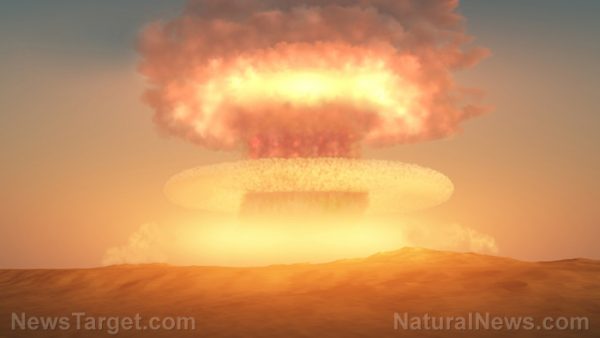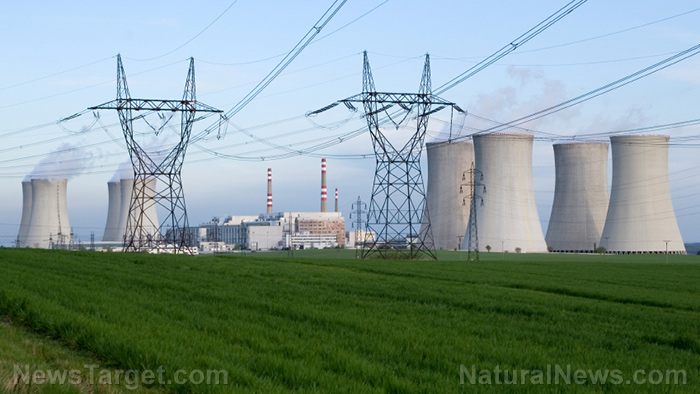
- China is on track to surpass the United States as the world’s leading nuclear power generator within five years, driven by AI energy demand and geopolitical disruptions.
- Beijing now accounts for nearly half of all nuclear reactors under construction globally, with 36 new reactors underway and a target of 110 gigawatts of installed capacity by 2030.
- The United States has added only three new reactors since 1996 and faces stagnant growth, high costs and regulatory hurdles despite President Trump’s goal to quadruple capacity by 2050.
- China builds reactors in five to six years at a cost of $2-3 per watt, compared to U.S. projects that take over a decade and cost $15 per watt.
- Competition extends to nuclear fusion, where the U.S. leads with more than half of global start-ups, while China’s fusion efforts remain state-run and nascent.
The new atomic race
In a tectonic shift with profound national security implications, China is on track to surpass the United States as the world’s leading nuclear power generator within the next five years, according to a new analysis by Gavekal Technologies released Monday. The development comes as surging electricity demand from artificial intelligence data centers and the prolonged closure of the Strait of Hormuz—a consequence of the U.S.-Iran war—have reignited global competition for reliable, carbon-free baseload power. While the United States still operates the world’s largest fleet of nuclear reactors, Beijing now accounts for nearly half of all reactors under construction globally, with 36 new units underway as of April. The widening gap between the two superpowers raises urgent questions about America’s ability to compete in the energy-intensive industries of the future, from AI to advanced manufacturing.China’s construction machine: Speed and standardization
China’s nuclear expansion is not merely ambitious—it is methodical and engineered for scale. Under its latest five-year plan, Beijing has set a target of 110 gigawatts of installed nuclear capacity by 2030, a figure that would vault it past the United States. The key to China’s success lies in standardization and state-backed financing. The country has streamlined its program to two primary reactor types: the Hualong One and the CAP1000, along with its larger CAP1400 model. This approach allows Chinese developers to build reactors in five to six years, roughly twice as fast as Western nations, at a cost of $2-3 per watt—drastically cheaper than the $15 per watt for the last U.S. reactors built at the Vogtle plant in Georgia. China’s nuclear companies are state-owned and receive cheap government-backed loans, reducing financing costs that can account for one-third of a project’s total expense. Additionally, the government requires electric grid operators to purchase nuclear power at favorable rates, ensuring a stable return on investment. This predictable regulatory and financial environment stands in stark contrast to the United States, where private developers face interest rate volatility, frequent regulatory changes and permitting delays that can stretch for years.U.S. stagnation: Three reactors since 1996
The United States, by comparison, has struggled to grow its nuclear fleet in the 21st century. According to the U.S. Energy Information Administration, only three new reactors have come online since 1996, reflecting decades of stagnation stemming from the 1979 Three Mile Island partial meltdown, rising interest rates in the 1980s and a regulatory culture that has become increasingly risk-averse. The two AP1000 reactors completed at the Vogtle plant in Georgia—the only new units built in the U.S. this century—took 11 years and cost $35 billion, more than double initial estimates. President Trump has set a goal of quadrupling U.S. nuclear capacity to 400 gigawatts by 2050, signing executive orders to cut red tape at the Nuclear Regulatory Commission and accelerate approval processes. But as Gavekal analyst Damien Ma noted, “signs of a sustained buildout are still elusive because of capital intensity and regulatory hurdles.” Unlike China’s centralized approach, the U.S. market relies heavily on private innovation, with dozens of start-ups developing small modular reactors—but few are expected to come online before the 2030s.The AI energy crunch: Why nuclear matters now
The timing of China’s nuclear surge is critical. The rapid expansion of AI data centers has created an urgent need for reliable, carbon-free baseload power that neither intermittent renewables nor fossil fuels can fully satisfy. Companies like Google, Amazon and OpenAI have poured billions into nuclear start-ups to power their data centers, but the U.S. currently lacks the heavy forging capacity to manufacture large reactor components domestically. Meanwhile, China is forging reactor pressure vessels continuously near Shanghai, ready to ship to new projects without delay. Compounding the challenge, the U.S. Northeast power grid has issued warnings of potential rolling blackouts, while China continues building coal-fired power plants daily to secure energy for decades. Even with its nuclear expansion, nuclear power accounted for less than 5 percent of China’s total electricity generation last year, compared to 18 percent in the United States. But Beijing’s diverse energy mix—including fossil fuels and cheap imports from Russia—gives it strategic flexibility that Washington lacks.The fusion frontier: U.S. leads innovation, but deployment lags
Beyond conventional nuclear power, the competition extends to nuclear fusion, which promises virtually limitless energy with far less radioactive waste. The United States remains a formidable force in fusion research, home to more than half of the world’s fusion start-ups, driven by private capital and strong commercial interest from AI companies. Energy Secretary Chris Wright has argued that “entrepreneurial capitalist competition is where the U.S. thrives” and that this approach can catapult America ahead of China. Yet China’s fusion efforts, though largely state-run and embryonic, are accelerating. Chinese scientists have built the world’s first “fourth-generation” gas-cooled reactor and are pursuing thorium reactors and spent fuel recycling to address domestic uranium shortages. A recent report warned that China is 10 to 15 years ahead of the United States in its ability to deploy next-generation reactors widely, even if U.S. labs remain at the forefront of discovery. The risk, as Paul Saunders of the Center for National Interest observed, is that “if America isn’t ready, we won’t be able to compete” in the global nuclear export market.A widening gap with national security consequences
The nuclear race between the United States and China is not merely an energy story—it is a national security crisis in slow motion. Energy underpins every aspect of modern power, from data centers and manufacturing to military capabilities and diplomatic influence. As Beijing builds 132 reactors over the next two decades and positions itself as a global nuclear supplier, Washington risks falling behind by failing to capitalize on the lessons of standardization, state-backed financing and predictable regulation that have fueled China’s success. The gap between the two superpowers is not closing; it is widening. Without a serious, whole-government approach to revive American nuclear power—beyond the reliance on private start-ups and regulatory streamlining—the United States may find itself importing the very energy technology it invented. Sources for this article include: SputnikGlobe.com NYTimes.com SCMP.com
Waymo recalls entire Robotaxi fleet after cars repeatedly enter active construction zones
By Willow Tohi // Share

Drone Strike on Moscow Refinery Causes “Oil Rain” in Russian Capital
By Garrison Vance // Share
Goldman Sachs Cuts Gold Price Forecast to $4,900 on Fed Rate Hike Expectations
By Sterling Ashworth // Share
The Techno-Feudal Trap: How Big Food and Big Pharma engineered your captivity
By Belle Carter // Share


French Domestic Intelligence Agency to Replace Palantir Software With French-Made Alternative
By Chase Codewell // Share

JD Vance Says U.S. Has "Decisively Won" Iran War in Some Ways as Midterms Near
By garrisonvance // Share
Trump Approval Rating Falls to Record Low; Republican Candidates Adjust Midterm Campaigns
By douglasharrington // Share

Lawmakers want an AI pause but can’t say what they’d actually pause
By isabelle // Share


The Chilean salmon advantage: A conservative case for nutrition and longevity
By avagrace // Share