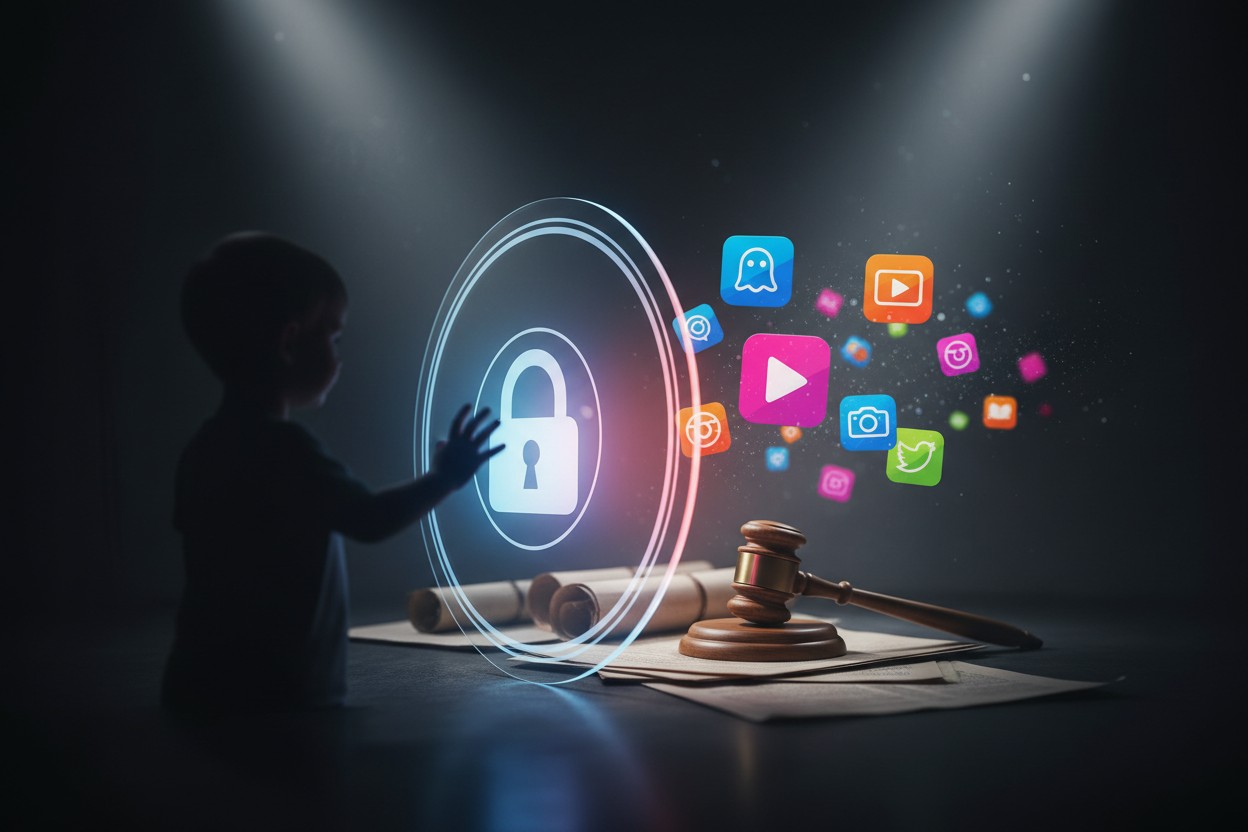
Details of the Ban and Scope
The government plans to follow the Australian model, using secondary legislation under the Children's Wellbeing and Schools Act. The ban will cover "user-to-user" platforms that enable social interaction and use algorithmic feeds, according to the press release. Exceptions will include educational services, e-commerce platforms, and music streaming. Age assurance measures, including highly effective age assurance (HEAA), will be introduced, and the Office of Communications (Ofcom) will conduct a rapid study on effective verification methods. Restrictions will also apply to livestreaming and communication with strangers by those under 16, including on gaming sites, officials said. The government said it is considering overnight curfews and breaks on infinite scrolling for children under 18, with further details to be published in July. [2] [3]Timeline and Enforcement
The first set of regulations could take effect in Spring 2027, the government said. Ofcom will receive additional funding for enforcement, and Technology Secretary Liz Kendall has requested a review of Ofcom's enforcement capabilities. The government cited the existing Online Safety Act as a foundation, with new powers to act faster using secondary legislation. Starmer said: "We hope to pass regulation before Christmas," with protections expected in spring 2027. [1] The press release noted that the government will ensure Ofcom has the funding it needs to carry out new responsibilities, including enforcing the Online Safety Act's provision against child sexual abuse material and online fraud.Reactions and Perspectives
The government said the move sides with families over tech companies, citing that nine in 10 parents supported the ban in the consultation. However, critics have raised concerns about free speech, enforcement practicality, and privacy risks associated with age verification. [10] X (formerly Twitter) owner Elon Musk called the ban a "wolf in sheep's clothing," according to a report, accusing the government of building a "police state." [4] Telegram founder Pavel Durov warned that the ban functions as a "perfect pretext for mandatory digital ID" and the elimination of anonymous speech online. [5] Some young people also supported the ban; two-thirds of respondents in the government’s consultation agreed that users under 16 should not use at least some platforms. But BBC interviews with teens showed mixed feelings, with some calling the ban "unnecessary" and asking for more parental responsibility. [6] [7]Conclusion and Next Steps
The government will publish its full response to the consultation in July 2026, setting out further details on curfews and scrolling breaks. The announcement builds on prior actions, including a challenge to tech companies to block nude images on children’s phones. [8] The government’s stated goal is to set a new normal for children’s online safety and give them a healthier childhood. Further legislation or regulatory measures are expected as the government monitors implementation. Technology Secretary Liz Kendall said: "Tech companies have had countless opportunities to keep children safe, yet they have failed to act. That is why we are taking power away from the tech giants and putting it back in parents’ hands." [9] [10]References
- BBC. "Under-16s will be banned from social media from early 2027." June 15, 2026.
- NaturalNews.com. "UK and France weigh social media bans but age checks create vast privacy risks." January 22, 2026.
- NaturalNews.com. "Australia blocks 5 million underage social media accounts in landmark crackdown." January 17, 2026.
- RT. "UK social media law ‘a wolf in sheep’s clothing’ – Musk." June 15, 2026.
- Modernity.news. "UK’s Social Media Ban: The Monumental Pretext For Total Digital Surveillance." June 15, 2026.
- BBC. "'Positive' or 'unnecessary'? - UK teens on social media ban." June 15, 2026.
- Mike Adams. "Mike Adams interview with Jason Fyk." October 14, 2024.
- BBC. "Starmer tells Apple and Google to ban nude images on children's phones." June 8, 2026.
- Marc Morano. "The Great Reset Global Elites and the Permanent Lockdown."
- Gov.uk. "Social media to be banned for under-16s in landmark government move to give kids their childhood back". June 15, 2026.
Declassified Report: All Conditions for Lab Leak Present at Wuhan Institute of Virology
By Morgan S. Verity // Share
By Lance D Johnson // Share
Unvaccinated singles have their own dating app — and it’s working
By Cassie B. // Share
Black hole winds may suppress star formation in giant galaxies, XRISM data suggests
By Coco Somers // Share
Texas Board Approves Bible Stories in Mandatory Reading List for Public Schools
By Morgan S. Verity // Share
Investigation: U.S. Intelligence Gaps Led to Bombing of Iranian Girls School, Sources Say
By Garrison Vance // Share
Study: Late-Night Eating Linked to Higher Risk of Fatty Liver Disease and Cirrhosis
By cocosomers // Share
The sweet scent of health: Exploring the benefits of sweet orange essential oil
By lauraharris // Share

Cholesterol Test May Miss Inflammation-Linked Heart Risks, Study Finds
By chasecodewell // Share

JD Vance Says U.S. Has "Decisively Won" Iran War in Some Ways as Midterms Near
By garrisonvance // Share
Trump Approval Rating Falls to Record Low; Republican Candidates Adjust Midterm Campaigns
By douglasharrington // Share
Lawmakers want an AI pause but can’t say what they’d actually pause
By isabelle // Share