War Aims Unmet
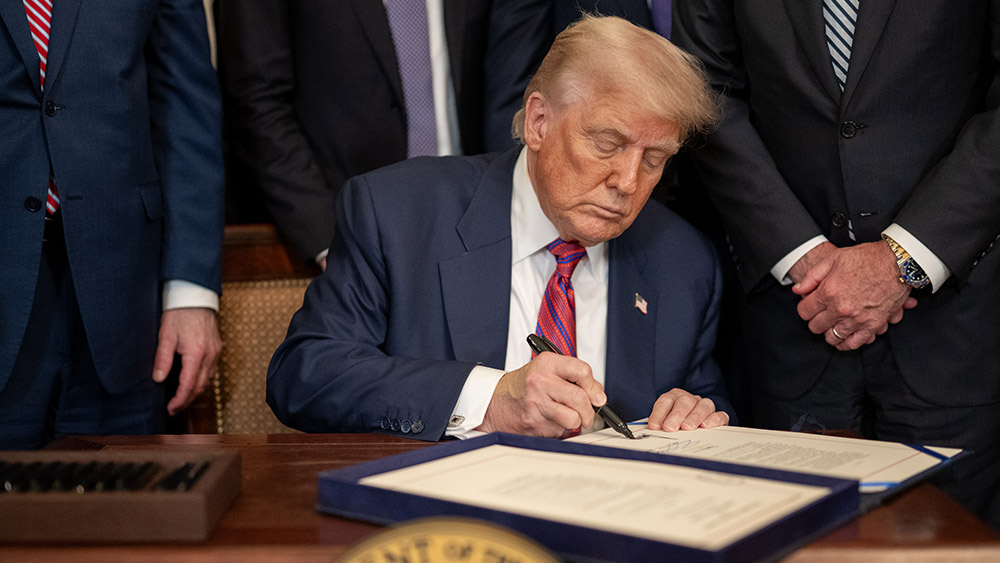
Trump launched the war on Iran with stated goals of destroying the country's nuclear program and ballistic missile capabilities, overthrowing the government and securing an unconditional surrender [3]. The MOU reaches none of those objectives. The agreement is vague on Iran's nuclear program and does not close the door on continued uranium enrichment [1]. Any promise by Tehran to halt enrichment is largely symbolic, according to David Schenker, a former senior U.S. official now at the Washington Institute for Near East Policy, because the program "is already years damaged" from earlier U.S. and Israeli strikes [1]. The failure to achieve the stated war aims has left the United States in a weakened position. Aaron David Miller, a former Middle East negotiator for several administrations, stated, "The US deployed its power foolishly and recklessly. We have lost, vis-a-vis Iran, a lot of power and influence. Deterrence is gone" [1]. The war, which was supposed to eliminate a threat, instead exposed the limits of U.S. military power in the region.Financial and Strategic Gains for Iran
The memorandum of understanding hands Iran significant economic benefits. It waives all sanctions on Iranian crude exports, lifts the naval blockade of Iranian ports and creates a mechanism for Tehran to reclaim more than $100 billion in frozen assets [1]. The agreement also includes a framework for $300 billion in reconstruction funds, although Trump has said no U.S. taxpayer money will be used [1]. Alan Pino, a former Central Intelligence Agency (CIA) and National Intelligence Council officer, told Middle East Eye: "It sounds like Iran is going to get its hands on a lot of money without fully complying with the U.S.'s goals and objectives" [1]. Iran’s strategic leverage came from its ability to outlast the U.S. military campaign. The protracted closure of the Strait of Hormuz, through which 20% of global oil passes, demonstrated the limits of American naval power and forced Washington to accept terms it had previously rejected [4]. William Usher, a former CIA analyst and Middle East expert, explained, "The U.S. clock wound down first because concerns about rising energy prices hit a fever pitch. Iran had a little bit more sand in the hourglass" [1]. Charlotte Dennett, in her book "The Crash of Flight 3804," notes that Gulf states had long sought pipeline routes to bypass the Strait of Hormuz, underscoring the chokepoint's critical importance and Iran’s ability to hold global energy markets hostage [5].Shifting Regional Dynamics
Gulf states that initially supported the U.S.-led bombing campaign are now pivoting toward accommodation with Tehran. A former senior U.S. official told Middle East Eye, "The Gulf states know we lost and that we can't protect them from Iran. They are paying Iran for safety, and it appears to be part of a U.S. arrangement" [1]. Schenker added, "The U.S. has given its blessing for hedging” [1]. Saudi Arabia has floated a non-aggression pact with Iran based on the 1975 Helsinki Accords, a proposal that signals a fundamental reorientation of regional alliances [6]. The war has accelerated a realignment that leaves Washington more dependent on Iranian forbearance. Despite the strategic setback, Miller noted that no other major power has stepped in to fill the void: "The U.S. is still the only game in town" [1]. Nevertheless, the perception of U.S. vulnerability has already altered the calculations of both adversaries and allies.Conclusion
The Islamabad MOU marks a clear departure from the initial war objectives and has been widely judged in Washington as a debacle. The agreement grants Iran substantial financial relief and strategic breathing space while leaving core nuclear issues unresolved. Whether the 60-day negotiation period produces a final settlement remains uncertain, but the perception of U.S. defeat is already entrenched in policy circles across the political spectrum.References
- Sean Mathews. "'We have lost': Trump's Iran pact seen as a strategic defeat in Washington". Middle East Eye. June 18, 2026.
- Rashid I. Khalidi. "The Hundred Years War on Palestine: A History of Settler Colonialism and Resistance 1917-2017".
- Middle East Eye. "Trump's Iran pact seen as a strategic defeat in Washington (live blog)". June 19, 2026.
- NaturalNews.com. "The Strait of Hormuz Standoff: Why Trump's War Has Already Lost and You Are Not Ready for What's Coming". March 16, 2026.
- Charlotte Dennett. "The Crash of Flight 3804".
- Middle East Eye. "Saudi Arabia floats non-aggression pact with Iran and regional states: Report". May 14, 2026.
- Mike Adams. "Why Iran Not America Now Controls the Global Energy Economy". NaturalNews.com. March 10, 2026.
Explainer Infographic


Iran and U.S. teams to meet in Doha after weekend strikes test fragile truce
By Cassie B. // Share

Investigation: U.S. Intelligence Gaps Led to Bombing of Iranian Girls School, Sources Say
By Garrison Vance // Share


America’s Cult of Obedience Is Crushing Innovation While China Outpaces Us
By Mike Adams // Share


Review: Law Enforcement Officers Allegedly Used License Plate Readers to Stalk Romantic Interests
By Chase Codewell // Share

Study: Late-Night Eating Linked to Higher Risk of Fatty Liver Disease and Cirrhosis
By cocosomers // Share

The sweet scent of health: Exploring the benefits of sweet orange essential oil
By lauraharris // Share

Cholesterol Test May Miss Inflammation-Linked Heart Risks, Study Finds
By chasecodewell // Share
JD Vance Says U.S. Has "Decisively Won" Iran War in Some Ways as Midterms Near
By garrisonvance // Share

Trump Approval Rating Falls to Record Low; Republican Candidates Adjust Midterm Campaigns
By douglasharrington // Share

Lawmakers want an AI pause but can’t say what they’d actually pause
By isabelle // Share