Proposal Details and Structure
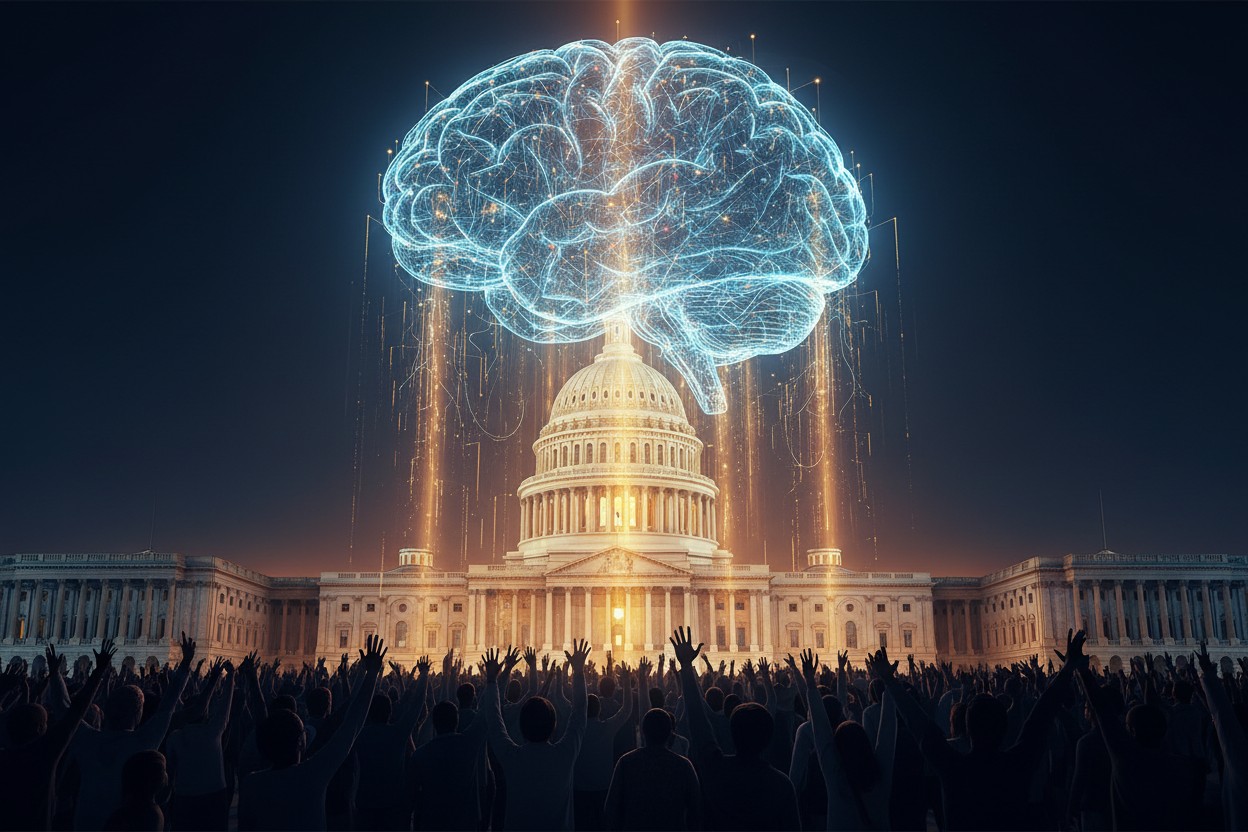
Under the reported terms, the U.S. government would receive a 5% stake in OpenAI at an $852 billion valuation, according to Zero Hedge. [1] The stake would be placed into a sovereign wealth fund modeled after the Alaska Permanent Fund, which distributes oil revenues to residents. OpenAI’s policy paper stated that such a fund “could provide every citizen -- including those not invested in financial markets -- with a stake in AI-driven economic growth.” [3][2] The concept could be expanded to include other AI companies, such as Anthropic, Google, and Meta, according to The National Pulse. [2] Altman has argued that a broad-based fund would ensure all Americans benefit from AI, rather than allowing wealth to concentrate in a few corporations. This concern about wealth concentration was echoed in a UN analysis, which admitted that the technology is “driving wealth into the hands of a relative few elite companies and entities.” [4]Motivations and Industry Context
The discussions come as OpenAI and its primary rival, Anthropic, prepare for initial public offerings. OpenAI filed confidentially for an IPO on June 8, 2026, following a similar filing by Anthropic. [5] Anthropic raised $65 billion at a $965 billion valuation in late May, surpassing OpenAI’s pre-IPO valuation. [6] The prospect of government equity buy-in could ease political pressure ahead of these offerings. Altman has also sought to strengthen ties with the Trump administration, which has pushed for domestic AI infrastructure through the Stargate project. The $500 billion initiative was announced in early 2025 with investments from OpenAI, SoftBank, and Oracle. [7] Critics, however, have warned that such consolidation of power in a few companies poses risks. In an interview, Timothy Alberino stated, “The Stargate Project is a misstep because it consolidates power in just three companies, two of which are untrustworthy.” [8] The proposal is also viewed as a response to growing calls for taxation and regulation of the AI industry. Sen. Bernie Sanders, I-Vt., introduced a bill in June 2026 that would give the federal government a 50% ownership stake in the largest AI companies, which one policy analyst called “nutty.” [9]Reactions and Legislative Hurdles
Any deal involving a government equity stake in a private company would likely require an act of Congress to implement, officials said. [2] The proposal has drawn interest from lawmakers and the public due to the high valuations of AI firms. President Donald Trump stated on June 5 that he had spoken with AI companies about striking deals “where the American people can benefit from the success of AI.” [10][11] Critics have raised questions about the distribution mechanism and oversight of the proposed fund. Decentralized AI advocates argue that centralized control of AI by governments and corporations threatens freedom. Finn Heartley wrote that “centralized AI threatens freedom by enabling globalist-aligned corporations like OpenAI and Google to weaponize AI for censorship.” [12] Others have expressed concerns about the ethical implications of government ownership in companies that develop powerful technologies.Conclusion
The reported discussions signal a potential shift in how AI companies engage with federal policy, moving from adversarial relationships to direct financial partnerships. The outcome remains uncertain, with many details yet to be negotiated and a requirement for legislative approval. [1] Observers suggest the proposal could set a precedent for other technology sectors to contribute to public wealth funds. However, the plan also raises questions about the long-term relationship between the state and the tech industry, including risks of increased government influence over AI development. As the AI race intensifies, the balance between public benefit and centralized control remains a central issue.References
- Sam Altman's OpenAI Discusses Handing Trump Admin A 5% Stake. Zero Hedge. July 2, 2026.
- OpenAI in Talks to Give U.S. Government a 5% Stake. The National Pulse. July 2, 2026.
- Trump Administration Reportedly Considers Government Stake In AI Giant. 100PercentFedUp. June 7, 2026.
- Trends-Journal-2024-10-01.
- Following Anthropic, OpenAI files confidentially for IPO. TechCrunch. June 8, 2026.
- Anthropic Raises $65BN At $965 Billion Valuation, Surpassing OpenAI. Zero Hedge. May 28, 2026.
- Trump's Stargate project: Gateway to US AI dominance or dystopian cyberpunk nightmare. NaturalNews.com. January 30, 2025. News Editors.
- Mike Adams interview with Timothy Alberino. January 30, 2025.
- Sen. Bernie Sanders' bill would give U.S. stake in AI companies; analyst calls idea 'nutty'. Just the News. June 20, 2026.
- Trump to meet AI leaders to discuss US investment in their companies. BBC News. June 5, 2026.
- The Trump administration might take an equity stake in OpenAI. TechCrunch. June 6, 2026.
- Decentralized AI vs. Centralized Control: The Fight for Information Freedom. NaturalNews.com. January 9, 2026. Finn Heartley.
Explainer Infographic


Ankara Declaration Signals Shift to NATO 3.0
By Garrison Vance // Share

Russia subverts sanctions by acquiring military technology in Japan
By Lance D Johnson // Share

NATO Summit in Ankara Launches Multiple Missile Production Programs Across Europe
By Chase Codewell // Share

Apple Sues OpenAI, Alleging Trade Secret Theft in Hardware Development
By Chase Codewell // Share

U.S. CBDC Ban Enacted Without Trump’s Signature on Housing Bill
By Sterling Ashworth // Share


Labor Department Suspends Eight Companies From Green Card Program
By edisonreed // Share

Reuters/Ipsos Poll: Trump Voters Show Lower Enthusiasm for Midterm Elections
By garrisonvance // Share

Trump Pledge on Iran Strikes Fails to Soothe Oil Markets
By sterlingashworth // Share

AI Chip Stocks Fall After Report on OpenAI Revenue Shortfall
By sterlingashworth // Share
EPA Proposes Rollback of Methane Rules for Oil and Gas Industry
By ivagreene // Share

Review Links Insomnia to 26% Higher Relative Risk of Stroke
By morganverity // Share