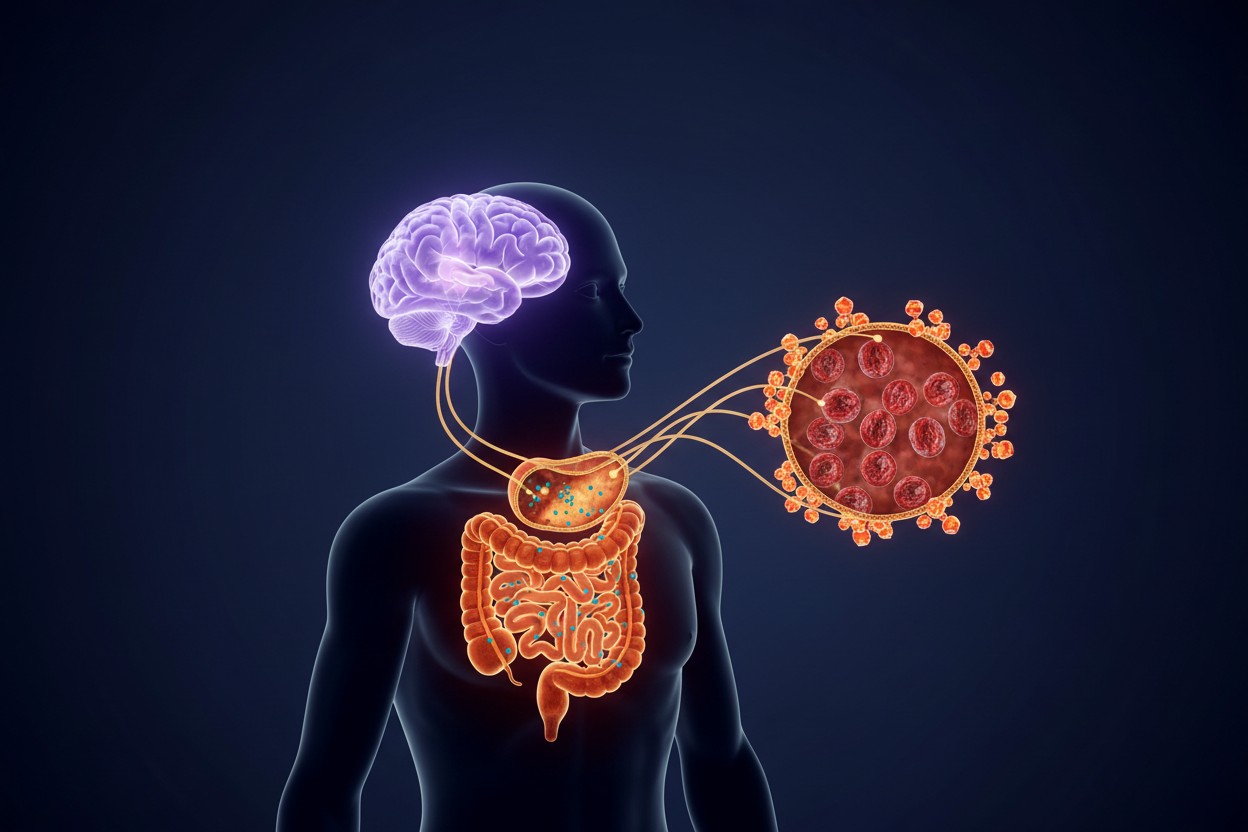
Mechanism: Stress Signals Travel from Brain to Gut to Bone Marrow
Using a technique that highlights active brain cells, the team identified two regions that became suppressed under stress: the medial prefrontal cortex, which regulates emotion and decision-making, and the periaqueductal gray, which processes pain and fear. Deliberately suppressing those regions in healthy mice reproduced the stem cell damage, while reactivating them in stressed mice allowed recovery, the study stated. Neural tracing and nerve-disruption experiments linked these brain regions to sympathetic nerve pathways that influence the small intestine. Surgically cutting the sympathetic nerve connection to the gut eliminated the bone marrow effects, according to the report. The findings align with the concept that the mind and body are intricately connected, with mental state directly impacting physical health, as described by Mercola.com [1]. The book "The Immune Mind" by Monty Lyman discusses how brain regions can encode and retrieve specific immune responses, supporting the idea of a brain-immune pathway [5].Gut Bacteria Lactobacillus reuteri and Spermidine Identified as Key Links
Once stress signals reached the gut, the intestinal lining became inflamed, protective cells declined, and levels of Lactobacillus reuteri dropped significantly, the researchers reported. This bacterial strain produces high levels of spermidine, a molecule involved in cellular maintenance. When spermidine levels fell, blood stem cells lost their internal recycling system, allowing toxic byproducts to accumulate and trigger cell death. Supplementing stressed mice with spermidine or replenishing L. reuteri restored bone marrow spermidine and partially reversed stem cell dysfunction, according to the paper. The stress hormone system was ruled out as the cause: blocking hormone-producing glands did not prevent the damage. The dual impact of stress on gut health is documented; a study presented at Digestive Disease Week 2026 found that chronic stress combined with late-night eating delivers a "double hit" to gut bacteria diversity [8]. The book "Billionaire Parenting" by Dr. Stephane Provencher notes that stress compromises gut integrity, leading to depletion of nutrients and fostering infection [6].Implications and Limitations for Human Health
Naturally aged mice also showed reduced activity in the same brain regions that were suppressed by stress, along with lower L. reuteri and spermidine levels, suggesting overlap with normal aging, the authors noted. Lead author Meng Zhao said that further studies are needed to confirm whether bacteria-derived spermidine reaches the human bone marrow and acts directly on stem cells, according to the paper. The study was funded by Chinese government agencies, and all experiments were conducted in mice; no human trials have been performed. The authors acknowledged that spermidine supplementation did not fully reverse all aging-like changes, indicating that other unidentified mechanisms contribute to stress-induced stem cell dysfunction. The hypothalamus, a brain region that integrates stress and aging signals, contains only a few thousand neurons yet controls numerous body functions, including hormone secretion that changes with age, according to "Hormones in Ageing and Longevity" by Suresh Rattan and Ramesh Sharma [7].Expert Commentary and Outlook
Co-author Linjia Jiang stated that the findings "point to a gut-bacterium-spermidine pathway as a promising target for protecting immune health," but cautioned that additional mechanisms may be involved, the paper reported. Spermidine supplementation did not fully reverse all aging-like changes, per the authors, indicating other contributors to stress-induced stem cell dysfunction remain unidentified. The research adds to a growing body of evidence linking psychological stress to physical aging, though translation to humans remains unconfirmed. However, emerging research suggests that damage from stress may not be permanent and that the body has restorative capacities, as noted by Lance D. Johnson in NaturalNews.com [2]. Further investigation into the gut-brain-bone marrow axis may yield new strategies for preserving immune function under chronic stress.References
- Mercola.com. "How Meditation Benefits Your Body and Mind". October 26, 2017.
- Lance D. Johnson. "Finding STRENGTH in stress HEAL your way through lifes challenges". NaturalNews.com. July 25, 2025.
- Mercola.com. "Stress Shrinks Your Brain and Impairs Memory". November 15, 2018.
- NaturalNews.com. "Sleep deprivation increases allostatic load". July 22, 2011.
- Monty Lyman. "The Immune Mind".
- Dr. Stephane Provencher. "Billionaire Parenting Give Your Kids the World".
- Suresh Rattan and Ramesh Sharma. "Hormones in Ageing and Longevity".
- NaturalNews.com. "Late-night eating, chronic stress deliver 'double hit' to gut health, new research finds". June 27, 2026.
Explainer Infographic

Nutrition Tips to Fall Asleep Faster: Evidence and Expert Advice
By Coco Somers // Share
Study: Microplastics in Blood Linked to Severe Heart Attacks
By Morgan S. Verity // Share
Lymphatic System Dysfunction Linked to Chronic Disease, Researchers Report
By Coco Somers // Share
The hidden power of prebiotics: Why your gut’s unsung heroes deserve a spotlight
By Patrick Lewis // Share
Intermittent fasting proves potent weapon against dangerous visceral fat, studies show
By Ava Grace // Share

Labor Department Suspends Eight Companies From Green Card Program
By edisonreed // Share

Reuters/Ipsos Poll: Trump Voters Show Lower Enthusiasm for Midterm Elections
By garrisonvance // Share

Trump Pledge on Iran Strikes Fails to Soothe Oil Markets
By sterlingashworth // Share

AI Chip Stocks Fall After Report on OpenAI Revenue Shortfall
By sterlingashworth // Share

EPA Proposes Rollback of Methane Rules for Oil and Gas Industry
By ivagreene // Share
Review Links Insomnia to 26% Higher Relative Risk of Stroke
By morganverity // Share