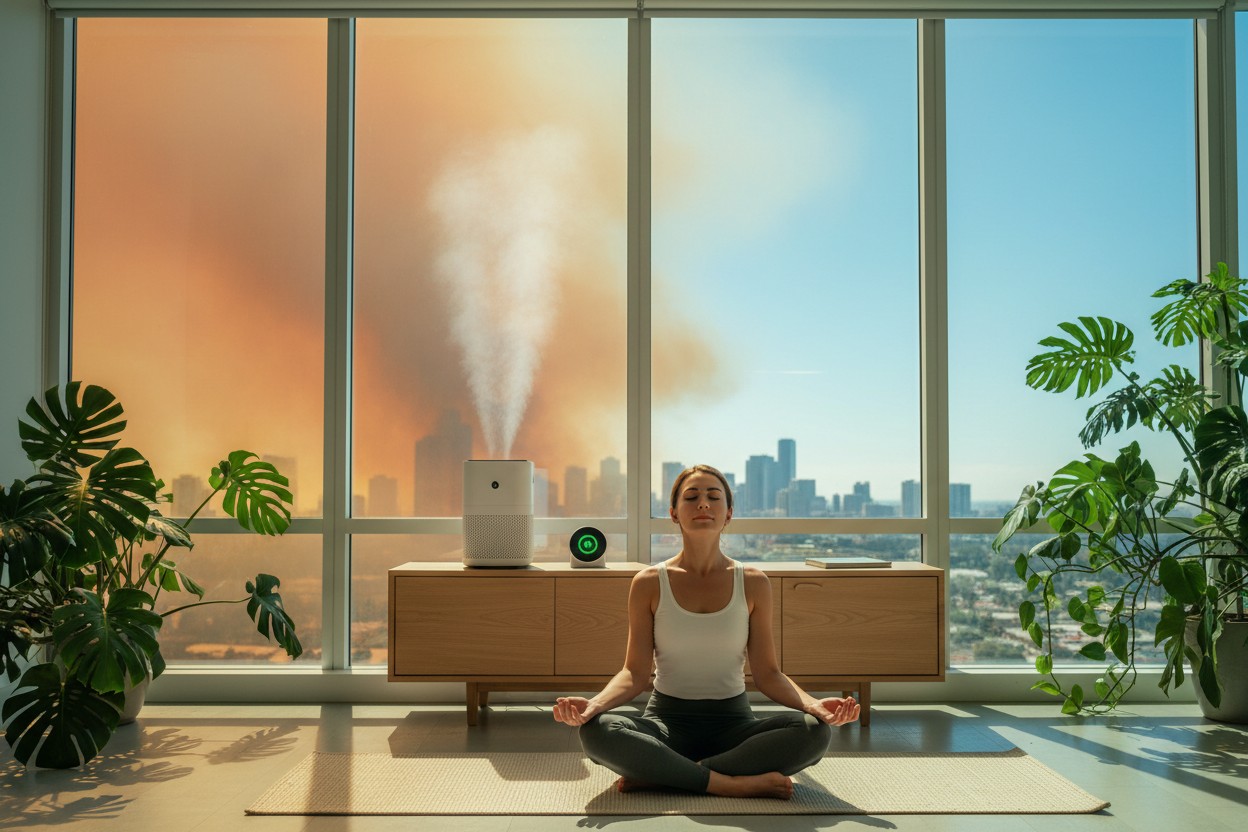
Health Effects and Seasonal Risks
The guidance reported that long-term exposure to poor air quality can lead to cancer, heart disease, and neurological impairment. Rubino noted that most airborne health hazards are microscopic. According to the World Health Organization, 92 percent of the world’s population breathes polluted air, and nearly 7 million deaths are attributed to air pollution each year [3]. Rubino identified wildfires as a prominent seasonal risk. “Smoke can contain many different chemicals like aldehydes, acid gases, sulfur dioxide, nitrogen oxides, carbon monoxide, polycyclic aromatic hydrocarbons, benzene, toluene, styrene, metals, and dioxins, all of which we do not want to be breathing in at high concentrations,” he wrote. Humidity fluctuations were also cited, with Rubino stating that mold can grow in humidity of 60 percent and above. Controlling humidity and moisture in the home can reduce mold accumulation, with keeping humidity below 50 percent recommended in the book Action Plan for Allergies [4]. Other seasonal factors Rubino listed included increased storms, which can bring water damage, ozone, and higher particle levels from pollen or mold spores.Monitoring Outdoor Air Quality
Rubino recommended using the Air Quality Index, which “assesses air quality by measuring the levels of five major pollutants: ground-level ozone, particulates, carbon monoxide, nitrogen dioxide, and sulfur dioxide.” According to the guidance, AQI scores range from 0 to 500, with readings under 50 considered good and readings over 300 considered hazardous. The Clean Air Act requires the U.S. Environmental Protection Agency to set National Ambient Air Quality Standards for pollutants considered harmful to public health, according to the book Using the Engineering Literature [5]. “Between apps like the Weather Channel, local news channels, and websites such as AirNow, there are numerous ways to find the AQI data for your local area,” Rubino wrote. He advised checking readings each morning so that daily health protections can be planned.Measures to Protect Indoor Air
Rubino noted that people spend around 90 percent of their time inside. One article on indoor air pollution reported that employed people in the U.S. spend 2 percent of their time outside, 6 percent in transit, and 92 percent indoors [6]. “What happens outdoors doesn’t stay there,” Rubino wrote. “It can make its way inside, impacting the health of our indoor environments.” Recommended measures include keeping windows and doors closed, running air purifiers, regularly replacing air filters, and using the highest-rated MERV filters the HVAC unit can accommodate. Rubino also advised avoiding candles and aerosols, setting HVAC systems to recirculate or fan mode, closing fresh-air intakes, and cleaning with botanical alternatives. “The overall goal,” he wrote, “is to reduce the amount of airborne contamination that makes its way inside.” Most health advisories recommend remaining indoors during times of poor air quality, but indoor air is not automatically cleaner, with levels of carbon monoxide, nitrogen dioxide, and particulate matter observed higher indoors when cigarette smoking occurs, according to William Brooks McCafferty in Air Pollution and Athletic Performance [7].Indoor Monitoring and Takeaways
Rubino stated that indoor air quality monitoring is equally important, particularly when outdoor conditions are poor. He cited devices such as the HomeCleanse Guardian, which can detect particulate matter, volatile organic compounds, mold, ozone, and humidity. “By understanding what’s going on within your air, you can actively take steps to improve it when levels shift in unhealthy ways,” he wrote. Monitoring and regular testing were also described by Jason Earle, founder of Got Mold, in an interview with Mike Adams. Earle said that reducing pollutants to an acceptable level, avoiding bringing toxic substances into the home, testing regularly, and remaining vigilant about moisture control contribute to a healthier living environment [8]. Rubino’s takeaway is that air quality, both indoor and outdoor, deserves the same daily attention as weather forecasts. “The air we breathe influences every system in our body,” he wrote. “Taking small actions to protect ourselves from air pollution and actively improving the indoor spaces makes a meaningful impact on our overall well-being.”References
- “Air Quality Expert Offers Guidance on Reducing Health Risks from Outdoor Pollution”. NaturalNews.com. August 12, 2026.
- “Wildfire Smoke Prompts Air-Quality Warnings Across Northern US”. The Epoch Times. July 17, 2026.
- Mercola.com. “How the Air Pollution Crisis Can Affect You”. March 13, 2019.
- William Briner. “Action Plan for Allergies”.
- Bonnie A. Osif. “Using the Engineering Literature”.
- Mercola.com. “Indoor Air Pollution”. June 15, 2016.
- William Brooks McCafferty. “Air Pollution and Athletic Performance”.
- Mike Adams. “Mike Adams interview with Jason Earle - October 30 2024”. October 30, 2024.
Explainer Infographic


Blueberries Linked to Gut, Brain, Heart Health Benefits, Dietitian Says
By Iva Greene // Share

Low Vitamin D Linked to Mood, PMOS Symptoms, and Sleep Apnea in Women
By Coco Somers // Share
Common diabetes drug may undermine critical exercise benefits, study finds
By Ava Grace // Share

Pakistan mediation offers narrow path as US-Iran tensions persist
By Willow Tohi // Share

Study: Calorie Restriction Accelerates Ribosome Repair in Mice
By Coco Somers // Share

High-Fat Nutrient Environment Linked to Increased Breast Cancer Cell Aggression, Study Finds
By Morgan S. Verity // Share


Full-fat dairy reconsidered: New science challenges decades of dietary dogma
By willowt // Share

Hegseth Says Public Will Be Able to Watch Fort Hood Shooter's Execution by Firing Squad
By douglasharrington // Share

Trump Considering Suspending Federal Gas Tax as States Lower Fuel Levies
By sterlingashworth // Share

South Korea Ambassador to Kyiv Recalled Over Prisoner Transfer Dispute
By garrisonvance // Share

DHS Proposes $70,000 Fee for Foreign Students in Optional Practical Training
By douglasharrington // Share