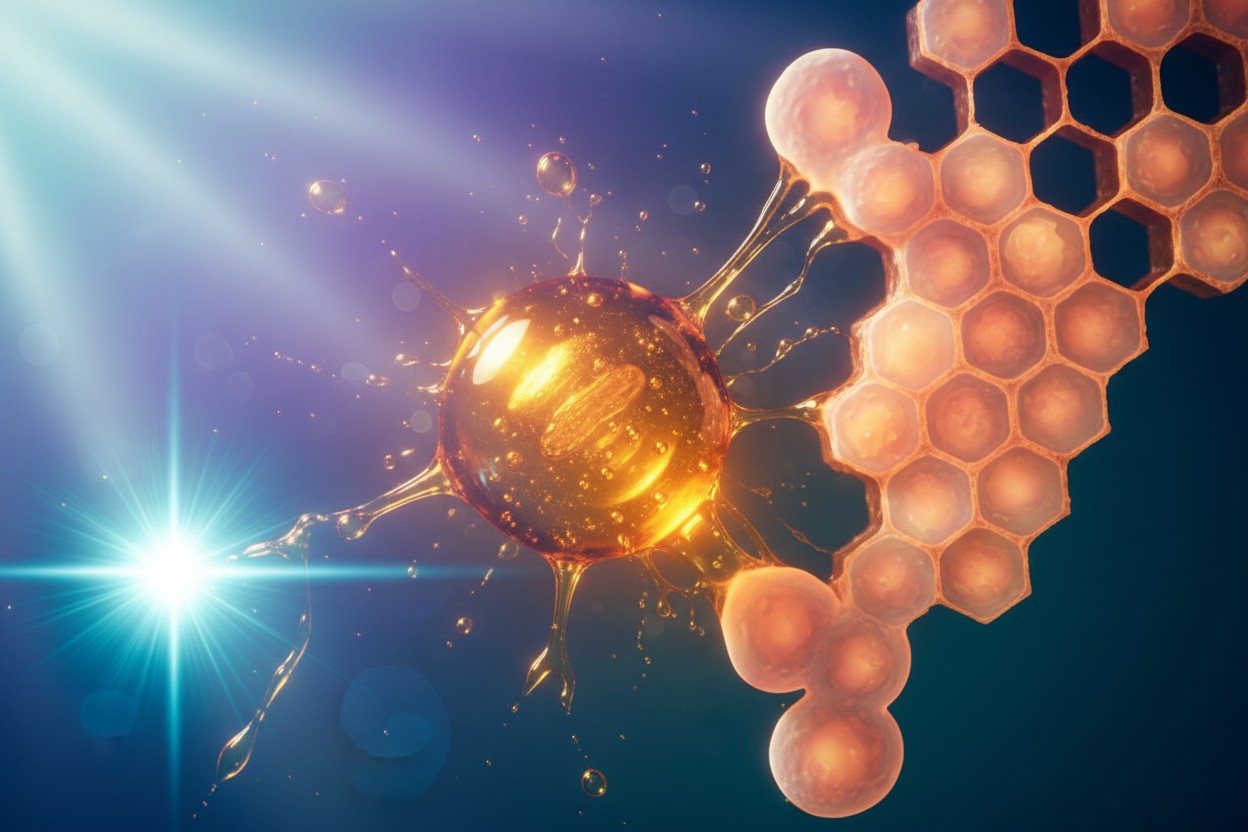
Study Reports Honey Aided Skin Cell Recovery After UV Exposure
Researchers in Italy reported that human skin cells treated with multifloral honey showed increased antioxidant activity and stronger markers of recovery after exposure to ultraviolet (UV) light, according to a new study published in the journal Antioxidants and reported by mindbodygreen on July 18, 2026. The study involved fibroblasts, keratinocytes, and skin stem cells grown in the laboratory, the researchers said. A subset of cells was treated with a small amount of honey for two days before UV exposure. The study's authors stated that the findings come from isolated cells under laboratory conditions and do not prove that honey-based skincare products provide the same benefits in humans.Study Design and Methodology
The researchers treated several types of human skin cells with multifloral honey for two days before exposing them to ultraviolet light, according to the study. The cell types included fibroblasts, keratinocytes, and skin stem cells, which together maintain the structure of skin and help it repair itself after injury, the report stated. Measurements included markers of oxidative stress, antioxidant activity, and inflammation, along with genes involved in cell repair, aging, and regeneration, the report stated. The emphasis on oxidative stress follows a broader research base showing that antioxidants can protect the body against damage by reactive oxygen species, which attack membrane lipids, proteins, and DNA, according to a 2009 paper in Food Chemistry [1]. The research was designed to assess whether honey could help skin cells maintain resilience to UV-related stress rather than to evaluate wrinkle reduction, the study authors said.Key Findings: Antioxidant Activity and Stem Cell Renewal
Honey-treated cells showed greater antioxidant activity and produced less nitric oxide, a compound that can contribute to cellular stress when present in excess, according to the study. Genes associated with cellular aging showed lower activity in honey-treated cells, while genes involved in protecting cells from stress showed increased activity, researchers reported. Polyphenols found in natural substances such as chamomile have been described as effective anti-inflammatories that can promote cellular health in skin and allow normal cellular function and healing to work more efficiently, according to Lee Michelle's book 'The Young Skin Diet' [2]. Skin stem cells treated with honey maintained stronger activity of genes associated with self-renewal after UV exposure, the researchers reported. The repair response was described as balanced rather than excessive, helping cells respond to stress without triggering an overactive repair process, according to the study.Limitations and Researcher Cautions
The study was conducted in isolated human skin cells grown in the laboratory, a method that the researchers said is valuable for understanding biology but does not confirm effects in real people. The study's authors cautioned that honey should not be treated as a substitute for sunscreen or established skincare practices, according to the report. Honey has a history of use in skincare, the report noted. Raw honey has been used as an exfoliating mask that loosens dead skin cells, attracts moisture to skin, and reduces blemish-causing bacteria, according to Jolene Hart's book 'Eat Pretty' [3]. Manuka honey has also been used topically as part of wound-healing protocols, according to a personal account from Stephanie MoDavis [4]. The findings align with existing research showing that honey contains antioxidant and anti-inflammatory compounds, and medical-grade honey has been used for years to help wounds heal, the report stated.Implications for Skincare and Skin Resilience
The research reflects a shift in skincare science toward supporting the skin's ability to repair itself after everyday damage from sunlight, pollution, and inflammation, according to the report. Topical approaches have been described as capable of lessening photoaging, or light-induced damage from UV radiation, and alleviating inflammation and oxidative stress, according to Whitney Bowe's book 'The Beauty of Dirty Skin' [5]. Research has also examined the skin's natural mechanisms for adapting to sun exposure, with some researchers advocating the controlled use of sunlight to stimulate the body's innate protective systems, according to a report from NaturalNews.com [6]. Some commentators have questioned the emphasis on total sun avoidance, stating that sunlight is crucial for health and that avoiding it doubles mortality rates and cancer risk, according to a report from midwesterndoctor.com [7]. Despite widespread sunscreen use, skin cancer rates continue to climb, with approximately 9,500 Americans diagnosed daily, according to a report from NaturalNews.com [8]. Future skincare products may use compounds from honey in more advanced ways, but that science remains in early stages, the report stated. Established foundations for healthy skin aging remain unchanged, the report said: daily sunscreen use, avoiding unnecessary UV exposure, consuming antioxidant-rich foods, getting adequate sleep, not smoking, and maintaining the skin barrier with moisturizer. Antioxidants including vitamins A, C, and E, carotenoids, and polyphenols have been linked to protection against wrinkles, which result from collagen depletion triggered by sun exposure, chronic stress, and smoking, according to a report from NaturalNews.com [9]. Diets higher in meat, butter, high-fat dairy, and sugar have been associated with a greater likelihood of wrinkles, according to a separate report from NaturalNews.com [10]. "After sun exposure, the goal is to calm inflammation, restore moisture, and support healing," Veena Vanchinathan, a board-certified dermatologist, said in a report from Everyday Health [11].Conclusion: Focus Shifts to Skin Repair Capacity
The broader takeaway from the study is that healthy skin aging involves maintaining the capacity for self-repair over time, not only slowing visible changes, the report stated. Researchers are still determining which ingredients can best support that process, and honey may be one of them, according to the study's authors. The larger development, the report stated, is that skincare is beginning to focus less on looking younger and more on helping skin function at its best for life.References
- Lieselot Vercruysse, Guy Smagghe, Tanja Beckers, John Van Camp. "Antioxidative and ACE Inhibitory Activities in Enzymatic Hydrolysates of the Cotton Leafworm, Spodoptera littoralis". Food Chemistry. 2009.
- Lee Michelle. "The Young Skin Diet: Science-Based Recipes and Treatments to Reveal Your Best Skin Ever".
- Jolene Hart. "Eat Pretty: Nutrition for Beauty, Inside and Out".
- Mike Adams. "Mike Adams interview with Stephanie MoDavis". May 27, 2025.
- Whitney Bowe. "The Beauty of Dirty Skin".
- "Research Examines The Skin's Natural Sun Exposure Adaptation Mechanisms". NaturalNews.com. April 11, 2026.
- "Dermatology's Crusade Against The Sun". midwesterndoctor.com. June 25, 2026.
- "Breakthrough Study Reveals Hidden Mechanism Behind UV-Induced Skin Cancer – and Why Most Sunscreens Fail to Protect You". NaturalNews.com. November 16, 2025.
- Belle Carter. "10 Science-Backed Foods That Fight Wrinkles Naturally". NaturalNews.com. March 24, 2026.
- NaturalNews.com. "Want to Look Younger? Cut Back on Sugar—It Makes You Look Old and Feel Terrible". NaturalNews.com. May 4, 2018.
- "We Tested Over 40 After-Sun Lotions—These Are the 15 We Keep Using". EverydayHealth.com. June 2, 2026.
Explainer Infographic

“UNBREAKABLE” on BrightU: Building a resilient garden and kitchen for cellular protection
By Belle Carter // Share
Lion’s mane mushroom capsules offer a natural path to wellness
By HRS Editors // Share
Food Waste Membrane Boosts Heat Transfer by 96.1%, Lasts 1,000 Cycles
By Coco Somers // Share
Fruit as hydration: How water-rich produce can help meet daily fluid needs
By Willow Tohi // Share

Two Science-Backed Strategies for Trauma Recovery: Movement and Memory Processing
By Chase Codewell // Share
Milk Thistle Extract Linked to Liver Protection in Recent Research
By Iva Greene // Share

Full-fat dairy reconsidered: New science challenges decades of dietary dogma
By willowt // Share

Hegseth Says Public Will Be Able to Watch Fort Hood Shooter's Execution by Firing Squad
By douglasharrington // Share

Trump Considering Suspending Federal Gas Tax as States Lower Fuel Levies
By sterlingashworth // Share

South Korea Ambassador to Kyiv Recalled Over Prisoner Transfer Dispute
By garrisonvance // Share

DHS Proposes $70,000 Fee for Foreign Students in Optional Practical Training
By douglasharrington // Share