‘Historic’ three-way summit of Putin, Trump, Xi could reshape global order — without Ukraine
By isabelle // 2026-10-22
Tweet
Share
Copy
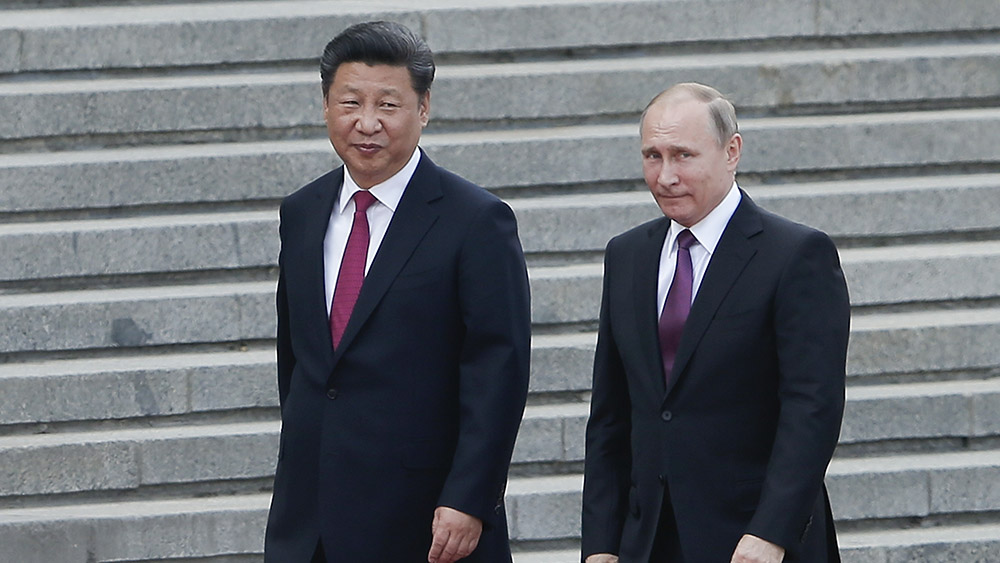
- Putin, Trump and Xi could hold their first-ever three-way meeting at an Asia-Pacific summit in Shenzhen, China, next month.
- Kremlin aide Yury Ushakov called the potential meeting historic but said much depends on China as host.
- The Wall Street Journal reported that Putin sees the summit as a chance to divide the world into spheres of influence.
- Ushakov cautioned that a single meeting cannot resolve the Ukraine conflict.
- Ukrainian Foreign Minister Andrii Sybiha warned the summit would only encourage Putin to keep fighting.
A new Yalta? Xi holds the gatekeeper role
The 1945 Yalta Conference saw Stalin, Roosevelt and Churchill carve up post-war Europe. Ushakov acknowledged the upcoming summit would generate a “storm of comments and assessments” if it materializes. The Journal, citing a former Russian intelligence officer, reported that Putin sees the meeting as a chance to divide the world into spheres of influence. Unlike Yalta, however, no European leader has a seat at this table. And as host, Xi would gain stature as a diplomatic power player, analysts told the Journal. Trump and Putin last met face-to-face in Anchorage, Alaska, in August 2025. Putin and Xi meet regularly, including at the Shanghai Cooperation Organization gathering in Bishkek, Kyrgyzstan, in August. Trump and Xi have sat down twice in 2026, in Beijing in May and at the White House in September.Nuclear disarmament on the table, but Ukraine peace unlikely
Trump has signaled he’s open to a three-way sit-down and has suggested nuclear disarmament could be part of the conversation. But don’t expect a quick fix for the war that has consumed Eastern Europe for years. Ushakov poured cold water on the idea that a single meeting could resolve the Ukraine conflict. “Even if the meeting lasts one, two or five hours, it still won’t be possible to resolve all the problems,” he said. Kremlin spokesman Dmitry Peskov said Monday that the subject had come up, but he stressed that nobody had put forward concrete proposals or agreements on the meeting or what it would cover. He conceded, “Of course, a final settlement is impossible without the participation of someone in Kyiv who is prepared to take responsibility.”Ukraine objects as tensions with Washington mount
Ukrainian Foreign Minister Andrii Sybiha criticized the proposed format on X, saying talks involving Kyiv, Washington and Moscow could bring peace faster, but a Russia-China-U.S. summit would do “only the opposite: encourage Putin to continue this war.” Relations between Kyiv and Washington have grown increasingly strained. Trump has recently paused sanctions on Russian diesel and signed an order waiving new penalties from a Russia sanctions bill authored by the late Sen. Lindsey Graham. He has also accused Ukrainian President Volodymyr Zelenskyy of not wanting peace.Diplomacy at last, or a new carve-up of the world?
After years of Western leaders funneling weapons and cash into a conflict with no end in sight, this summit would represent a dramatic shift toward the kind of great-power diplomacy that has been in short supply in the Ukraine discussion. U.S. Secretary of State Marco Rubio told reporters Monday during a visit to Uzbekistan that “the president is open to anything that he can do to help bring a war to an end, if it’s possible.” The question is: what kind of end are we talking about? Seth Jones of the Center for Strategic and International Studies told the New York Post that a Yalta-style arrangement would cut against American interests in both Europe and the Pacific. But after years of failed Western strategies and mounting casualties, direct dialogue between the men who actually hold power might be a better bet than yet another round of aid packages from Washington and Brussels. Sources for this article include: RT-English.com Reuters.com CNBC.com NYPost.comTweet
Share
Copy
Tagged Under:
Russia Ukraine China national security Trump Putin White House big government globalism chaos dangerous WWIII Xi military tech diplomacy weapons technology
You Might Also Like

Millions of hack attempts follow PHP leak as governments unplug websites
By Cassie B. // Share

Fire and fog over Kyiv: Moscow claims it gutted Ukraine’s missile and drone pipeline
By Lance D Johnson // Share

JPMorgan says Bitcoin may outperform stocks, bonds and gold – but still warns of “speculative” risk
By Belle Carter // Share
Recent News

FEMA Shifts Disaster Response Duties to States Under New Federal Plan
By douglasharrington // Share


Four surprising daily habits could help your brain bounce back from stress
By isabelle // Share

Small Trial Reports Berberine Supplement Altered Gut Bacteria Tied to Heart Health Markers
By cocosomers // Share
Millions of hack attempts follow PHP leak as governments unplug websites
By isabelle // Share