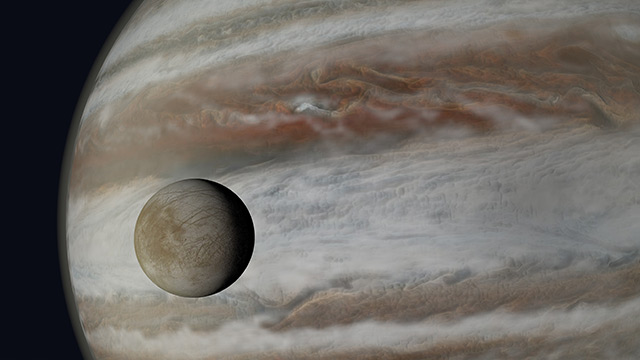
- A new study proposes that a geological process could deliver nutrients from Europa's surface to its hidden ocean.
- This solves a major puzzle about how life could be sustained in that isolated sea.
- Dense, salty surface ice may break away and sink through the moon's thick ice shell.
- This acts as a conveyor belt, supplying potential food for any organisms below.
- The finding provides a key hypothesis for NASA's ongoing Europa Clipper mission to test.
Borrowing an idea from Earth's geology
The research, published in The Planetary Science Journal, was led by Austin Green, who completed the work during his doctoral studies at Washington State University alongside associate professor Catherine Cooper. They turned to a well-understood Earthly process for inspiration: crustal delamination. On our planet, this occurs when dense, chemically altered sections of the crust detach and sink into the mantle. The team theorized a similar process could work on Europa. Certain areas of the moon's surface ice are packed with salts, which makes them denser than the purer ice around them. Previous research also shows that such impurities weaken the ice's crystalline structure. The combination of density and weakness could allow chunks of this nutrient-laden surface ice to break free and begin a gradual descent. "This is a novel idea in planetary science, inspired by a well-understood idea in Earth science," said Green, now a postdoctoral researcher at Virginia Tech. "Most excitingly, this new idea addresses one of the longstanding habitability problems on Europa and is a good sign for the prospects of extraterrestrial life in its ocean."How the icy conveyor belt works
Using computer simulations, the researchers modeled this "dripping" process. They found that for a wide range of salt concentrations, dense surface ice could indeed detach and sink all the way to the base of the ice shell, as long as the ice experienced some degree of weakening. The models showed this sinking is not a rare event but could occur on relatively short geological timescales. In some simulations, the process could begin in as little as 30,000 years in heavily damaged ice, while other scenarios showed material reaching the ocean after several million years. This suggests delamination could provide a steady, recurring supply chain of oxidants and other compounds from the surface to the depths. It transforms the ice shell from a static barrier into a dynamic, recycling system.A timely finding for a major mission
This research arrives at a pivotal moment in planetary science. NASA's Europa Clipper mission launched in 2024 and is scheduled to arrive at Jupiter in 2030. The spacecraft will conduct dozens of close flybys, using its instruments to probe the ice shell's thickness, composition, and structure. The findings from Washington State University provide a specific, testable hypothesis for the mission. Clipper's data could reveal signs of this sinking process, such as specific compositional variations or structural weaknesses in the ice. The implications are profound. For years, the search for life on Europa faced a logistical hurdle: even if life could exist in the ocean, how would it eat? This study offers a plausible answer, painting a picture of a world where the very ice that hides the ocean also nourishes it. It suggests that the violent radiation bathing Europa's surface, which was long considered a barrier to life, might actually be the key to fueling it below by creating nutrients that then slowly rain down into the dark. The universe continually reminds us that life finds a way, often in the places we least expect. As Europa Clipper speeds toward its destination, it carries with it a new and compelling vision of a living world – not despite its frozen exterior, but because of it. The icy moon may not just harbor an ocean; it may possess a built-in, geological life support system, turning a distant orb into one of the most promising addresses for life beyond Earth. Sources for this article include: ScienceDaily.com Space.com SpaceDaily.com
A contained threat, a human-made risk: Nipah’s dual reality
By Willow Tohi // Share

6 Natural solutions to address GOUT, the “disease of kings”
By Ramon Tomey // Share

House passes stopgap funding bill to avert shutdown
By Belle Carter // Share
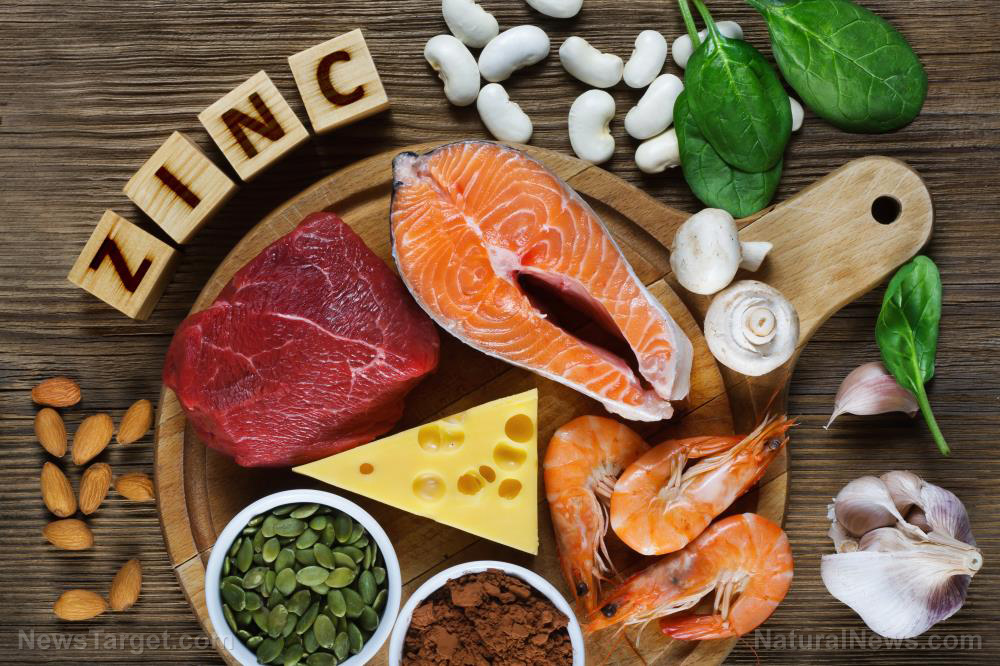
Zinc helps regenerate your aging immune system’s command center
By Willow Tohi // Share

Ultra-processed foods engineered for addiction like tobacco, Harvard study finds
By Cassie B. // Share
8 Benefits of pine bark extract for your brain
By News Editors // Share
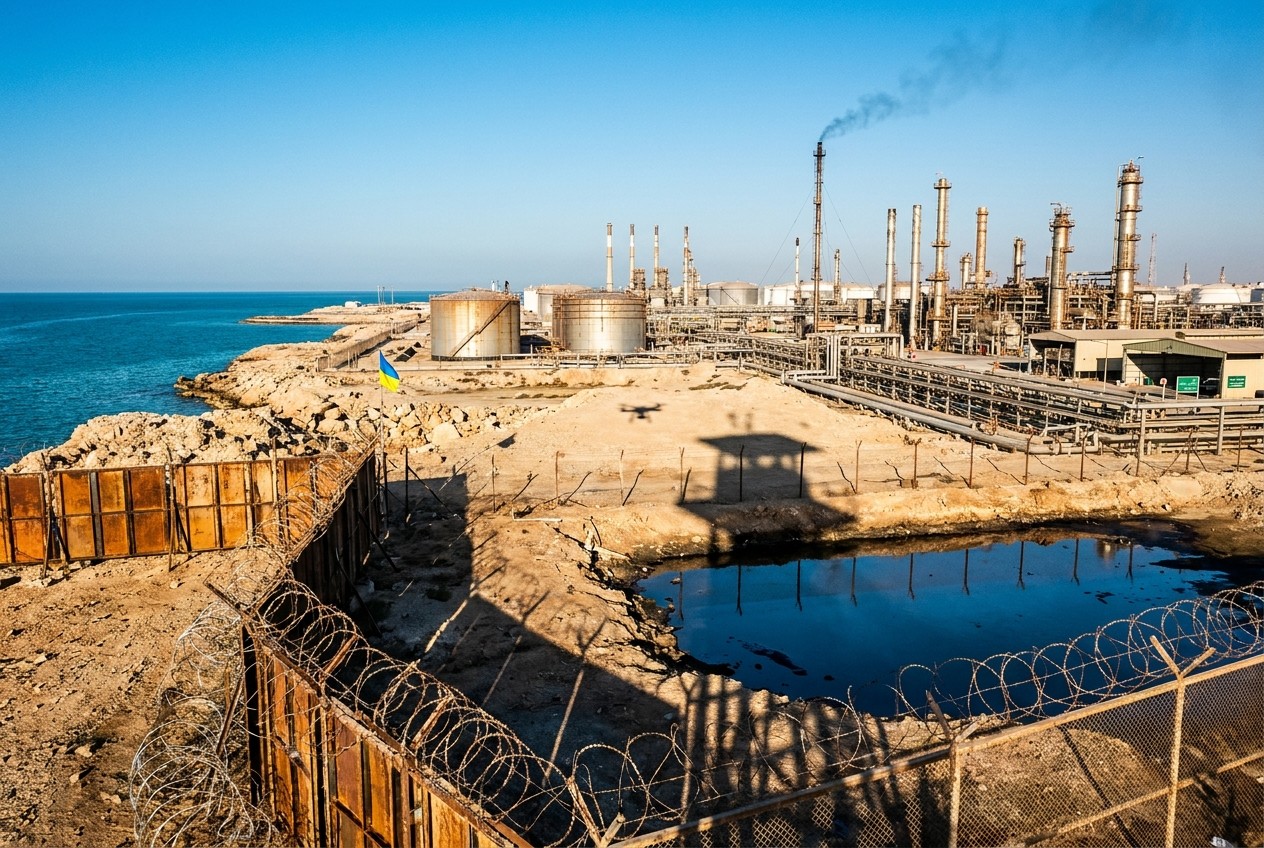
Iraq Detains Ukrainian Nationals Suspected in Plot Against Gulf Oil Facilities
By garrisonvance // Share

U.S. Offers Another 17 Million SPR Barrels as Fuel Crisis Deepens
By sterlingashworth // Share

U.S. Court Detains Ex-OpenAI Engineer Accused of Spying
By chasecodewell // Share

Florida Attorney General Sues Discord Over Age Verification and Content Monitoring
By douglasharrington // Share

IMF Chief Calls for AI Guardrails as Officials Weigh Economic Risks and Opportunities
By edisonreed // Share
