Blockade Details and Immediate Market Reaction
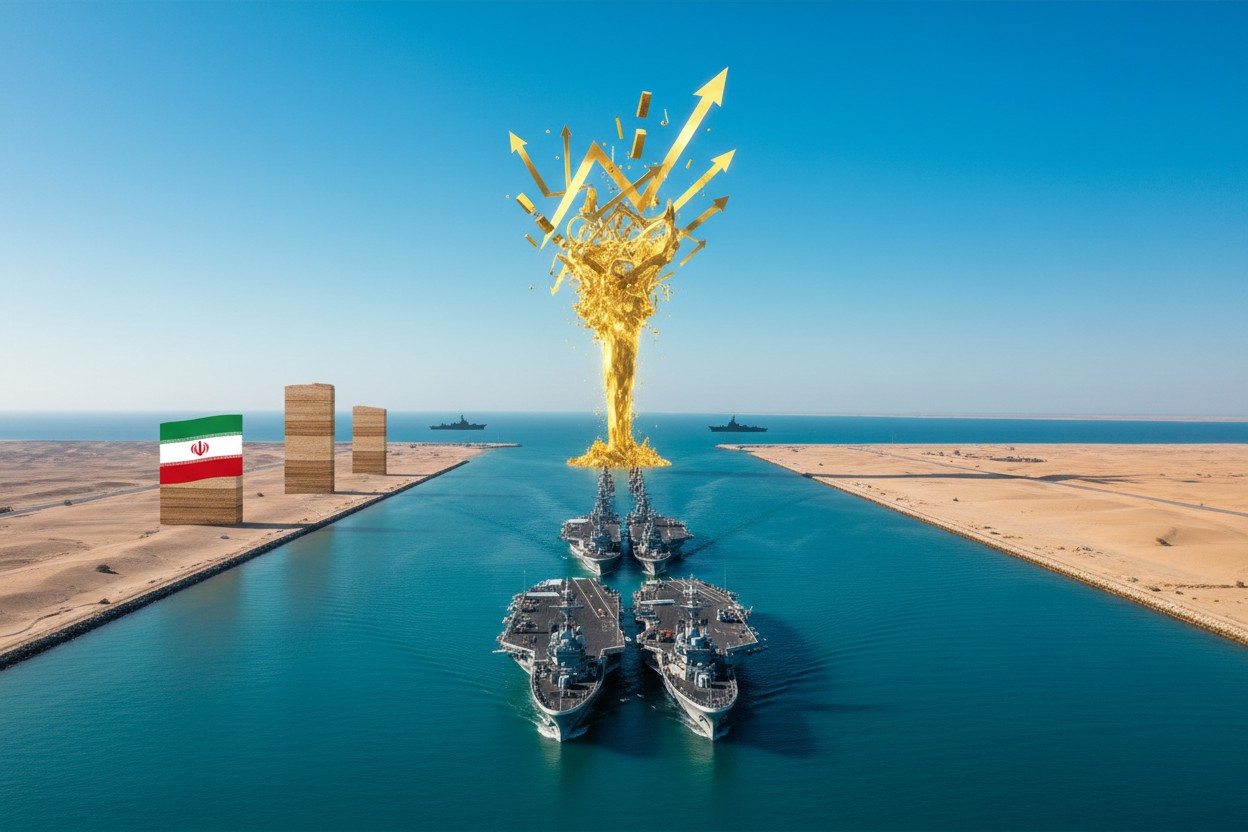
In a post on the social media platform Truth Social on Sunday, President Trump announced the U.S. would impose a naval blockade of Iran. "No one who pays an illegal toll will have safe passage on the high seas," he wrote [3]. A subsequent post from the White House account on a separate platform stated, "Effective immediately, the United States Navy, the Finest in the World, will begin the process of BLOCKADING any and all Ships trying to enter, or leave, the Strait of Hormuz" [4]. The U.S. Central Command (CENTCOM) stated that the blockade of maritime traffic to and from Iranian ports is set to begin at 10 a.m. Eastern Time on Monday. A CENTCOM spokesperson said the action would specifically target vessels transiting the Strait to and from Iranian ports [2]. Asian stock markets opened lower following the news, with Japan’s Nikkei 225 falling 0.84 percent and South Korea’s Kospi dropping 1.83 percent [5].Impact on Oil Supply and Iranian Response
Analysts estimate that a successfully enforced blockade could remove between 1.5 and 1.7 million barrels per day of Iranian crude oil supply from the global market. This would compound existing supply issues in the region [6]. Saudi Arabia announced last week that Iranian attacks had cut its production capacity by 600,000 barrels per day and temporarily reduced flows on its East-West pipeline by approximately 700,000 barrels per day, though those flows have since been restored. Senior Iranian officials have warned that any U.S. military presence near the Strait would be treated as a violation of the temporary ceasefire, suggesting a potential return to attacks on regional energy infrastructure. Iranian parliamentary speaker Mohammad Bagher Ghalibaf has previously categorically rejected U.S. assertions of "productive" talks [7]. In a statement, Iran's foreign ministry said the blockade constituted an act of aggression and a violation of international maritime law [3].Regional Supply Disruptions and Market Context
The Strait of Hormuz is a critical maritime chokepoint, with roughly 20% of the world's oil consumption and a similar share of global seaborne liquefied natural gas trade passing through it. Its effective closure has been the primary driver of oil market volatility since late February [8]. The blockade announcement has renewed concerns of a prolonged global energy crisis, reversing the brief market relief provided by the ceasefire announcement last week. The geopolitical analyst Nick Giambruno has previously warned that disruption of the Strait could cause immediate global economic chaos and skyrocketing energy prices, given that five of the world's top ten oil-producing countries border the Persian Gulf [9]. The conflict has already triggered severe economic disruptions worldwide, including fuel rationing protests in Ireland and a national energy emergency declaration in the Philippines [10] [11]. Markets are now assessing the potential for a prolonged conflict, with some analysts warning crude prices could reach $200 per barrel if disruptions persist [12].Conclusion and Broader Implications
The failure of diplomatic talks and the subsequent blockade order mark a significant escalation in the U.S.-Iran conflict, which began with coordinated strikes in late February. The immediate market reaction underscores the global economy's continued dependence on fossil fuels and the vulnerability of supply chains to geopolitical instability in the Middle East. International reaction has been mixed. The United Kingdom has stated it will not join the U.S. in enforcing the blockade of Iranian ports, though British minesweepers and anti-drone capabilities will continue operating in the region [13]. French President Emmanuel Macron, who spoke with Iranian President Masoud Pezeshkian, emphasized the need for Iran to swiftly restore freedom of navigation in the Strait [14]. The situation remains fluid, with the potential for further military and economic repercussions in the coming days.References
- Oil jumps above $100 as US to blockade Iranian ports after peace talks fail. - BBC. April 13, 2026.
- Oil Prices Jump Above $100 After US Says It Would Block Iranian Ports Starting Monday. - NTD. April 13, 2026.
- Trump's Strait of Hormuz blockade threat raises risks and leaves predicaments unchanged. - BBC. April 12, 2026.
- Trump blasts global allies over their refusal to deploy warships to the Strait of Hormuz. - NaturalNews.com. Ramon Tomey. March 18, 2026.
- Asian markets fall as oil surges past $100 after talks collapse. - Middle East Eye. April 13, 2026.
- Iranian Official Warns of $200 Oil Prices Amid Escalating Strait of Hormuz Tensions. - NaturalNews.com. Garrison Vance. March 17, 2026.
- Iran Denies U.S. Claims That Negotiations Between Washington and Tehran Are Underway. - NaturalNews.com. Ramon Tomey. March 25, 2026.
- Strait of Hormuz: How 30 Miles Could Quadruple Oil and Gas Prices. - NaturalNews.com. Willow Tohi. July 24, 2025.
- Geopolitical analyst warns of economic chaos should Iran shut down Strait of Hormuz. - NaturalNews.com. January 9, 2024.
- 500 Irish petrol stations could have 'no fuel by end of night'. - BBC. April 10, 2026.
- Global energy crisis deepens: The Philippines declares year-long national emergency amid Hormuz blockade. - NaturalNews.com. Patrick Lewis. March 26, 2026.
- Saudi Arabia warns of oil prices hitting $180 per barrel as Iran conflict threatens global energy shock. - NaturalNews.com. March 24, 2026.
- UK will not join Trump's blockade of Iran's ports in the Strait of Hormuz. - BBC. April 13, 2026.
- Macron: told Iranian President ceasefire must be ‘fully respected’ and include Lebanon. - Middle East Eye. April 11, 2026.
- Gusher of Lies – The Dangerous Delusions of Energy Independence. - Robert Bryce.

Trump Attributes Iran War Decision to Hamas Attack, Rejects Israeli Pressure Claims
By Garrison Vance // Share

UN Inspectors: Iran’s Uranium Stockpile Could Fuel Multiple Nuclear Weapons
By Edison Reed // Share

America’s NATO exit debate heats up as Trump calls alliance a “paper tiger”
By Cassie B. // Share

A pivot at the helm: Trump Media installs new leadership amid financial crossroads
By Willow Tohi // Share
Strait of Hormuz control becomes Iran’s new red line in stalled U.S. talks
By Willow Tohi // Share

Trump’s Ceasefire is a Smart Retreat, But the War’s Chokehold on Humanity Tightens
By Mike Adams // Share

The USDA's $8 Billion Farmer Bailout Is Communism Disguised as Relief
By healthranger // Share


Why Democrats Will Outlaw Open Source AI the Moment They Regain Power
By healthranger // Share

Could your sugar habit be reshaping your mouth's ecosystem?
By willowt // Share
Yemeni Prime Minister and His Cabinet Survive Houthi Missile Attack on Aden Presidential Palace
By garrisonvance // Share