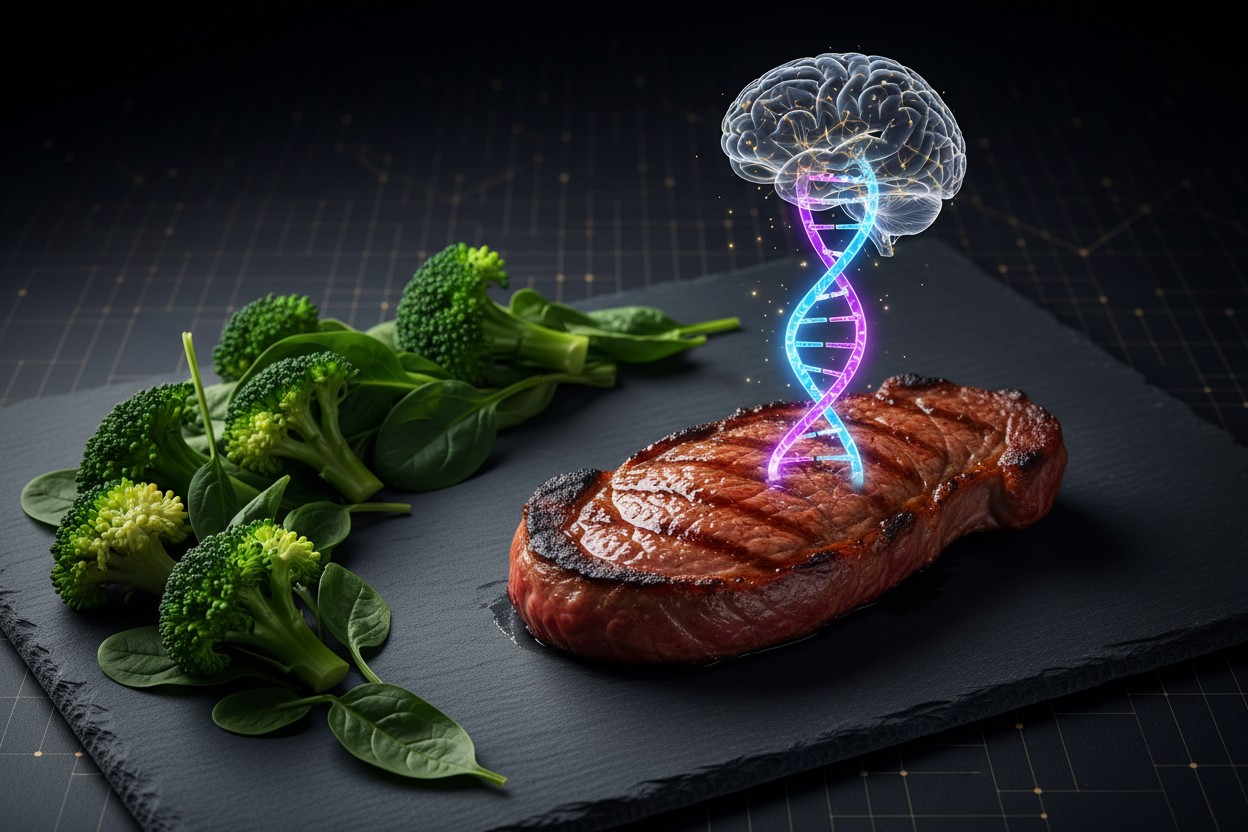
- A major study from Sweden's Karolinska Institutet found that for older adults carrying the high-risk APOE ε4 gene variant, a diet with relatively high meat intake was associated with slower cognitive decline and a lower risk of dementia over 15 years.
- The research was guided by an evolutionary hypothesis, as the APOE ε4 variant is ancient and may be better suited to a diet richer in animal foods, which was more common when this gene form arose.
- The results showed a stark genetic divide: Among high-meat consumers, the dramatically increased dementia risk typically linked to the APOE ε4 gene effectively disappeared, while the expected genetic risk was clear in those who ate less meat.
- The study emphasized that the type of meat is crucial; the association was strongest with unprocessed meats, while a higher proportion of processed meat was linked to increased dementia risk across all genetic groups.
- The findings challenge universal dietary advice for brain health, suggesting that effective Alzheimer's prevention may require personalized nutrition strategies based on an individual's genetics, rather than a one-size-fits-all approach.
The APOE gene: A double-edged sword
To understand this counterintuitive result, one must first understand the APOE gene. This gene provides instructions for making a protein crucial for managing cholesterol and fats in the bloodstream and brain. It comes in three primary forms, or alleles: ε2, ε3 and ε4. Each person inherits two copies, leading to different pairings. The ε4 variant is the game-changer; carrying one copy triples to quadruples the risk for Alzheimer’s, while two copies can increase risk ten to fifteenfold. In Sweden, about 30% of the population carries at least one ε4 allele, and they account for nearly 70% of Alzheimer's cases. The researchers were not blindly searching for a link. Their investigation was guided by an evolutionary hypothesis. The APOE ε4 variant is the oldest form of the gene, believed to have arisen during a period when human ancestors consumed a diet richer in animal foods. The team theorized that individuals carrying this ancient gene might metabolically thrive on a diet more reflective of that ancestral pattern. This study put that theory to the test in a modern population.Study design: Tracking diet and cognition over decades
The research leveraged the Swedish National Study on Aging and Care in Kungsholmen (SNAC-K), a long-term project tracking the health of older adults. Scientists analyzed data from 2,157 participants, all at least 60 years old and dementia-free at the start. They tracked self-reported dietary habits—specifically total meat consumption and the ratio of processed to unprocessed meat—alongside rigorous cognitive assessments and dementia diagnoses for up to 15 years, controlling for factors like age, education and lifestyle. Among participants who ate smaller amounts of meat, those with the high-risk APOE ε3/ε4 or ε4/ε4 genotypes had more than double the risk of developing dementia compared to those without these variants. This aligned with expected genetic risk. The surprise came in the high-intake group, where median consumption was roughly 870 grams of meat per week. In this group, the dramatic increased risk associated with the ε4 variant simply vanished. Their cognitive decline was slower, and their dementia risk was lower, effectively erasing the expected genetic disadvantage.Not all meat is created equal
The study offered a crucial nuance: the type of meat mattered significantly. A higher proportion of processed meat (like sausages and deli meats) in one’s total meat intake was linked to a higher dementia risk across all genetic groups. The apparent protective association was strongest with unprocessed meats. Furthermore, a follow-up analysis found that ε4 carriers who ate more unprocessed meat also had a lower risk of death from any cause, suggesting broader health implications. For years, public health guidance for brain health has largely championed plant-forward diets like the Mediterranean diet, which limits red meat. This new data injects complexity into that narrative. It suggests that blanket dietary advice may inadvertently disadvantage a genetically defined subgroup that comprises roughly a quarter of the global population.Limitations and the path forward
As with all observational studies, this research can show association but cannot definitively prove that eating more meat causes reduced dementia risk. Other factors linked to both diet and brain health could be at play. The authors strongly emphasize the need for the next critical step: clinical trials where dietary interventions are actively tested in people with different APOE genotypes to confirm cause and effect. For decades, the disease was seen as an inevitable byproduct of aging or bad luck with genes. Research has progressively shifted that view, revealing Alzheimer's as a disease process that begins decades before symptoms, influenced powerfully by lifestyle. The dominant nutritional narrative has focused on universal prevention strategies. This Swedish research pushes the frontier further, arguing that effective prevention may require moving beyond universal guidelines to embrace personalized nutrition, where genetics inform what "healthy eating" truly means for an individual. Why might ε4 carriers benefit from meat? Preliminary analyses pointed to differences in how these individuals process nutrients like Vitamin B12, which is abundant in animal products. The unique "food matrix" of meat—its specific combination of nutrients, fats and compounds—may interact with the ε4 carrier's distinct metabolism in a way that supports brain resilience, potentially countering inflammation or other damaging processes. "Personalized nutrition is critically important for Alzheimer's because each individual's disease progression, genetic risk factors and metabolic health are unique," said BrightU.AI's Enoch. "A tailored dietary approach can target specific nutritional deficiencies, reduce inflammation and support brain function in a way that a generic diet cannot. Therefore, it offers the best potential to manage symptoms and possibly slow the progression of the disease." Watch this video about the book "The Alzheimer's Prevention Plan" by Patrick Holford, Deborah Colson and Shane Heaton. This video is from the BrightLearn channel on Brighteon.com. Sources include: ScienceDaily.com JAMANetwork.com MedicalNewsToday.com BrightU.ai Brighteon.com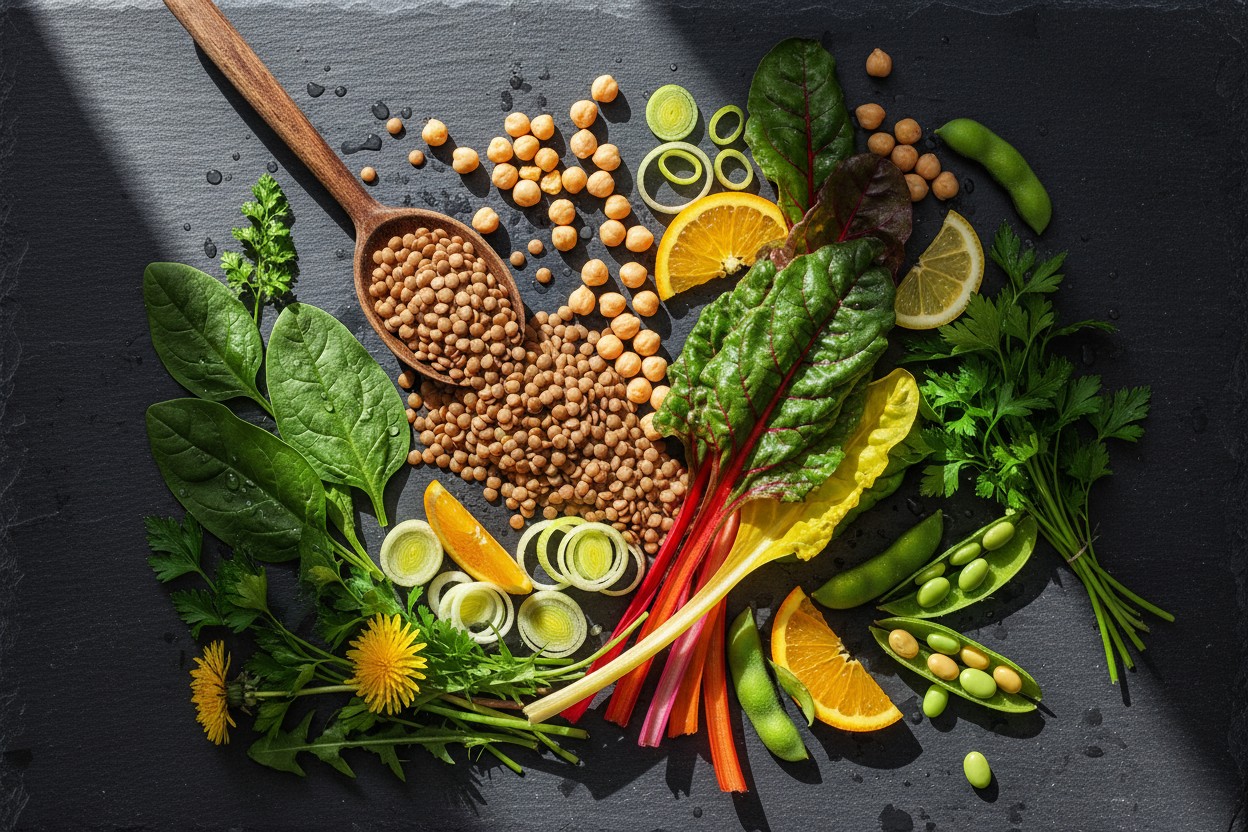
Eight Vegetables Provide Significant Dietary Iron, Data Shows
By Coco Somers // Share
Daily blueberries linked to sharper mind, stronger heart and cellular defense, new research reveals
By Jacob Thomas // Share

Study Links Nighttime Traffic Noise Exposure to Elevated Cholesterol Levels in European Adults
By Morgan S. Verity // Share

Beyond the immune system: Unveiling the multifaceted power of vitamin C
By Patrick Lewis // Share

Study Suggests Syncing Exercise to Internal Body Clock May Improve Heart Health Outcomes
By Coco Somers // Share

Kennedy refuses to guarantee he will follow CDC director’s vaccine guidance
By Cassie B. // Share

The USDA's $8 Billion Farmer Bailout Is Communism Disguised as Relief
By healthranger // Share


Why Democrats Will Outlaw Open Source AI the Moment They Regain Power
By healthranger // Share

Could your sugar habit be reshaping your mouth's ecosystem?
By willowt // Share

Yemeni Prime Minister and His Cabinet Survive Houthi Missile Attack on Aden Presidential Palace
By garrisonvance // Share