Study Context and Methodology
Researchers at the Federal Reserve Bank of Boston analyzed historical oil price shocks and compared the current Iran war-related disruption with the 1973 Arab oil embargo and the 1979 Iranian Revolution. The study controlled for changes in economic structure and monetary policy over the decades, officials said. The historical backdrop provides important context. Under President Richard Nixon, the U.S. economy faced rising inflation and unemployment, a combination that led to policy panic and wage-price controls [4]. By the time of the 1979 oil shock, the U.S. had experienced a credit bubble that financed deficits in developing countries, exacerbating the inflationary spiral [7]. The Phillips curve trade-off between inflation and unemployment was believed to be exploitable, as noted by Kennedy-era economists, but that relationship shifted dramatically during the crises of the 1970s [6]. The current study shows that the employment channel has weakened so substantially that oil shocks now present a different challenge.Reasons for Diminished Impact
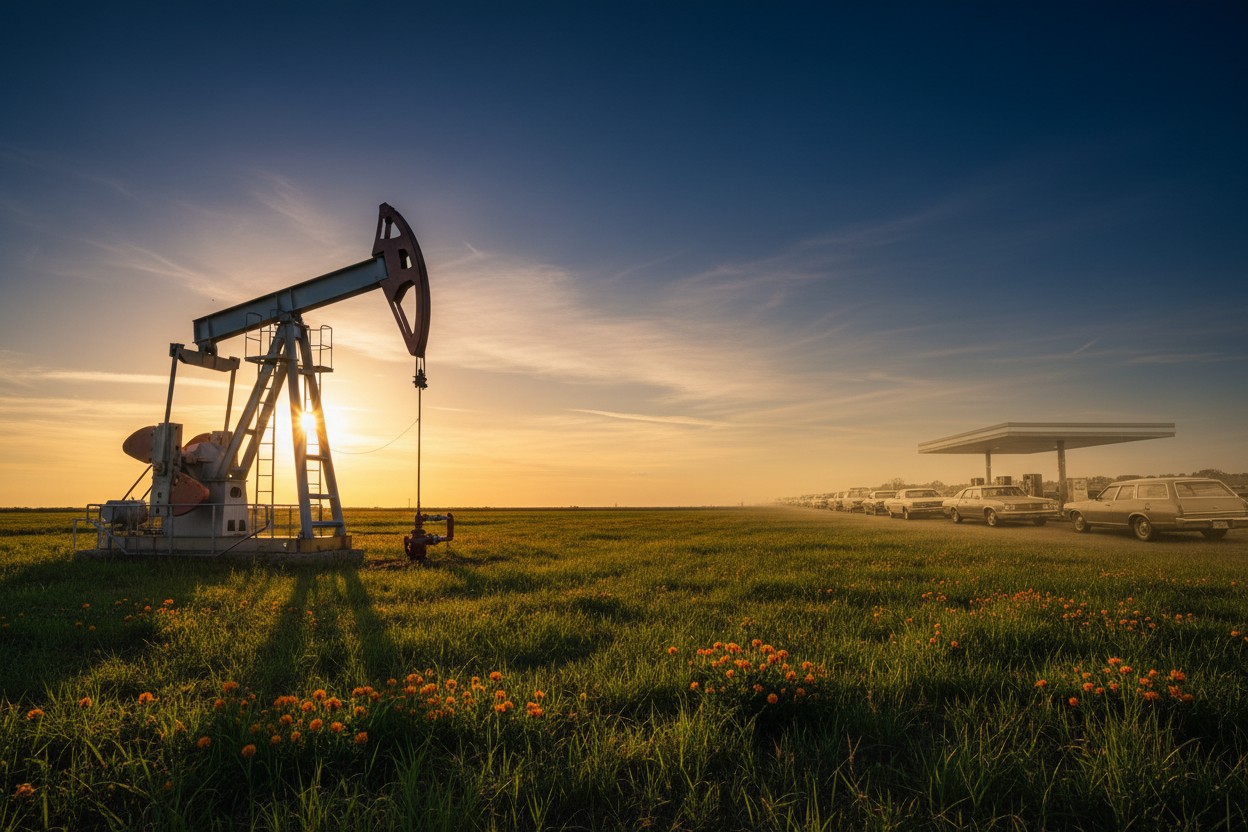
The shale revolution has made the United States a net exporter of petroleum products, reducing the economy's overall oil dependence, the report stated. The U.S. now uses less than one-third as much oil per unit of economic output as it did in the 1970s, according to the study. Regional offsets now cushion the national labor market. The Boston Fed found that Texas could see employment growth rise by roughly 1.7 percentage points after an oil shock, while states with little oil production, such as Massachusetts, would likely experience job losses. These offsets have become large enough to stabilize the national employment picture. However, the broader economy remains exposed to energy cost increases. Diesel prices have surged above $5 per gallon, acting as an ignition switch for broader inflation affecting all consumer goods, as diesel powers about 66% of U.S. freight trucks [2]. The rise in diesel costs has been dramatic, with prices soaring from $3.55 to $5.60 per gallon since early 2026, a 56% increase according to analysts [9]. The Iran war has also led to a repricing of risk across financial markets, with the disruption through Hormuz described as the largest oil supply shock in history [11].Implications for Monetary Policy
The Fed study suggests that future oil shocks may increasingly resemble an inflation problem rather than a recession problem. Researchers noted that the employment channel has weakened significantly, altering the trade-offs for central bankers. Officials said this represents a different challenge than the one faced during the 1970s oil crises. The Federal Reserve now faces a difficult environment. Minneapolis Fed President Neel Kashkari said in May that he does not feel comfortable signaling a rate cut, adding that the central bank may need to raise rates to contain rising prices driven by the war [12]. Minutes from the April FOMC meeting revealed a deeply divided committee, with a majority seeing a rate hike as likely warranted and many preferring to remove the easing bias [13]. The surge in oil prices has also put pressure on central bank balance sheets, as exchange rate depreciation and higher import costs feed into inflation, a dynamic seen in emerging markets in recent years [5].Conclusion and Ongoing Vulnerability
The United States remains vulnerable to energy inflation but is far less likely to suffer employment damage from oil shocks, the study concluded. The report stated that rising domestic production has fundamentally changed how higher crude prices ripple through the economy. According to the researchers, the findings do not eliminate inflation risk but indicate a structural shift in the oil-economy relationship. Nevertheless, the energy crisis triggered by the Iran war has surpassed the 1970s oil shocks in severity, according to IEA experts [3]. Analysts have warned that the combination of a Persian Gulf supply shock and a Fed committed to inflation fighting could produce stagflation, with rising prices and slowing growth [8]. The bond market has also begun to force reality onto Washington, with rising yields reflecting the strain of war and deficit spending, potentially forcing an end to the conflict before politicians are willing to admit it [10].References
- Kevin Hughes. "Saudi Arabia warns of oil prices hitting 180 per barrel as Iran conflict threatens global energy shock." NaturalNews.com. March 24, 2026.
- Ava Grace. "The $5 gallon that could break America." NaturalNews.com. March 19, 2026.
- Cassie B. "Global energy crisis triggered by Iran war surpasses 1970s oil shocks IEA warns." NaturalNews.com. March 25, 2026.
- Lindsey Brink. "The age of abundance how prosperity transformed Americas politics and culture."
- Mustapha Akinkunmi. "Central Bank Balance Sheet and Real Business Cycles."
- W Carl Biven. "Jimmy Carters economy."
- Charles P. Kindleberger and Robert Z. Aliber. "Manias Panics and Crashes A History of Financial Crises Sixth Edition."
- David Stockman. "When The Persian Gulf Supply Shock Meets The Warsh Fed: Stagflation & The Coming AI Bubble Bust." InternationalMan.com. May 9, 2026.
- "Stagflation Incoming: The Donald Ain’t Gonna Like What Happens Next!" ActivistPost.com. May 10, 2026.
- "Is The Bond Market About To Break Washington." ZeroHedge.com. May 21, 2026.
- "How the Iran War is Repricing Bitcoin." ActivistPost.com. April 21, 2026.
- "Fed Official: Iran War Limits Central Bank’s Ability to Provide Rate Guidance." NaturalNews.com. May 5, 2026.
- "Warsh Faces Uphill Battle As FOMC Minutes Show Deeply-Divided Fed Against Easing Bias." ZeroHedge.com. May 20, 2026.

Russia and Ukraine trade record drone strikes as conflict escalates
By Willow Tohi // Share

War Department: Elon Musk’s Grok AI Helped Fire 2,000 Missiles at Iran
By Garrison Vance // Share

The Eviction of Empire: How American supremacy was built on sand
By Ramon Tomey // Share
U.S. Average Gas Price Drops Below $4 Per Gallon for First Time Since April
By Garrison Vance // Share
Transforming Ben Gurion: A civilian airport turned military hub
By Ava Grace // Share

UK’s uranium deal for Ukraine sparks fears of corruption and nuclear escalation
By Cassie B. // Share

Cambridge Review Links Regular Reading to Lower Dementia Risk
By douglasharrington // Share

Ho Wood essential oil: A natural ally for health and wellness
By lauraharris // Share

Earth-sized world in "Goldilocks zone" offers icy intrigue in search for fife
By jacobthomas // Share

Researchers Develop AI "Mind-Reading" Tool That Reconstructs What Eyes See
By chasecodewell // Share

After the Penny, Congress Looks to Tackle the Cost of the Nickel
By sterlingashworth // Share
India's Central Bank Raises Repo Rate to 5.50%, First Increase Since 2023
By chasecodewell // Share