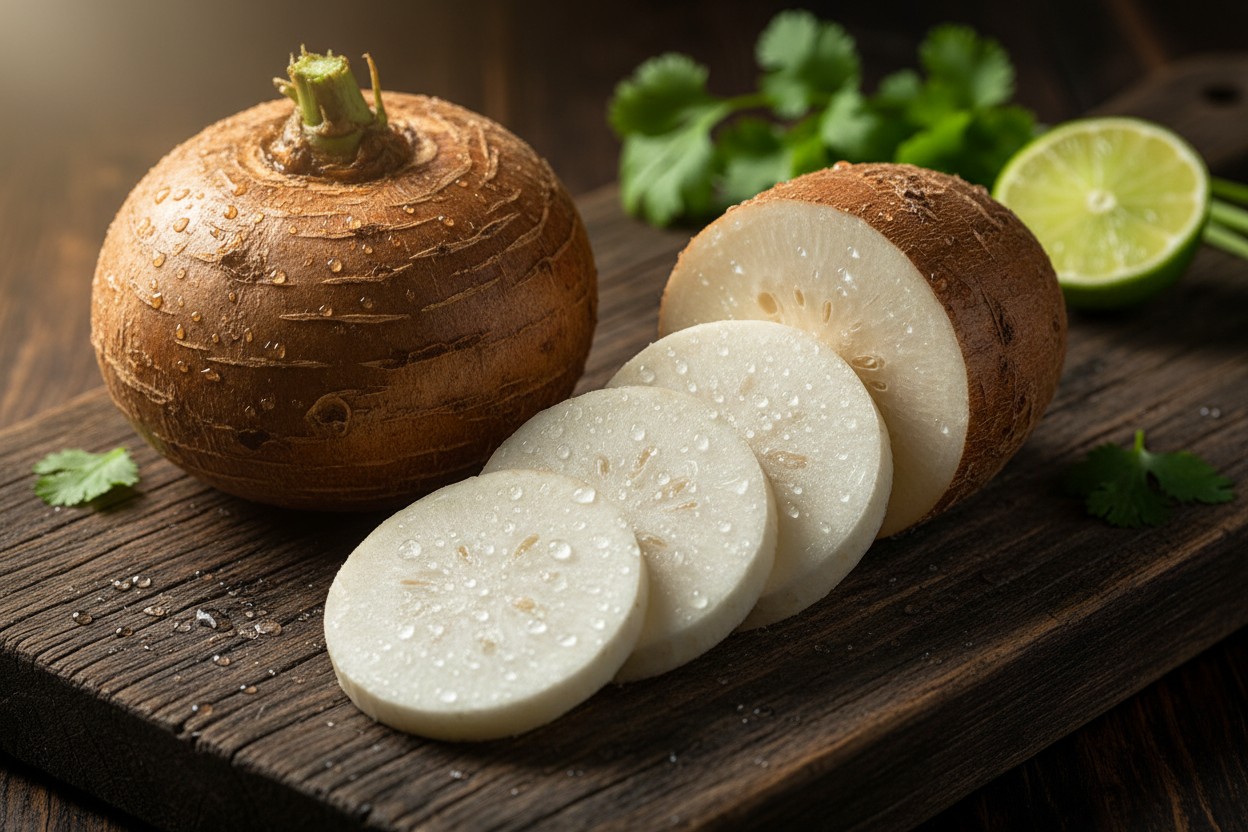
Nutritional Profile
Palinski-Wade described jicama as a low-calorie winner that provides crunch and flavor. A one-cup serving contains approximately 49 calories, along with 11.5 grams of carbohydrates and 6.4 grams of fiber, according to dietitians. Jicama is more common in Latin American cuisine, but Palinski-Wade noted that once people start eating it, they may wonder why they had not been enjoying it all along. Palinski-Wade said she often recommends jicama as a way to add a so-called starchy side or ingredient with few carbohydrates and little impact on blood sugar. For those who have not tried it, she explained that jicama is like a cross between a raw potato, a water chestnut and a mildly sweet turnip. The vegetable's high fiber content contributes to its classification as a beneficial source of dietary fiber, according to an article on Mercola.com that listed jicama among root vegetables and tubers that are excellent day-to-day sources of fiber [4].Water Content and Satiety
Palinski-Wade said the high water content of jicama provides volume and satiety with few calories and carbohydrates. This characteristic may help with appetite regulation and hydration, according to the dietitian. Fiber supplements have been shown to enhance weight loss among obese people, likely because fiber increases feelings of fullness [3]. When microbes in the gut digest fiber, a short-chain fatty acid called acetate is released, which travels to the brain and helps signal the body to stop eating [3]. Julie Lopez, a registered dietitian and chef with Virtual Teaching Kitchen in New Jersey, told the Mail that jicama is especially valuable because it provides both fiber and a unique prebiotic fiber called inulin. Lopez said fiber helps support regular digestion by adding bulk to stool and promoting healthy bowel function, while also slowing digestion, which can help a person feel fuller for longer after meals. The high water content of jicama can also provide a source of hydration and support overall digestive health, according to Palinski-Wade.Gut Health and Prebiotic Fiber
Jicama contains inulin, a prebiotic fiber that feeds beneficial gut bacteria. According to an article on NaturalNews.com, inulin-rich foods provide prebiotic fiber that can help with weight loss and stabilize blood sugar [2]. Lopez told the Mail that the prebiotic fiber in jicama supports a healthier gut microbiome and the production of compounds that influence digestion, metabolism, and appetite regulation. Restoring gut health through strategic dietary choices, including prebiotic foods, is supported by recent research [7]. A study published in Antioxidants, cited in the same report, found that jicama's inulin feeds beneficial gut bacteria. Additionally, a 2021 study in Advances in Nutrition found that inulin-type fructans can boost satiety, curb appetite and lower energy intake, which may support weight management. Modern diets laden with processed foods, antibiotics and environmental toxins disrupt gut balance, but fiber-rich foods like jicama can help restore it [7]. The soluble dietary fiber from jicama has also been studied for its effect on food products, such as enriching stirred yogurt [8].Culinary Uses and Storage
Palinski-Wade recommended selecting jicama that feels heavy for its size, with smooth, dry skin and no soft spots. Wrinkling or mold near the stem indicates the vegetable is past its prime, she said. Whole jicama can be stored in a cool, dry place or the refrigerator. After peeling and cutting, the pieces should be refrigerated in an airtight container and used within a few days to maintain crispness. Jicama can be eaten raw in salads, slaws, or as a snack with dips, and it can also be cooked in stir-fries or roasted. Palinski-Wade suggested swapping tortilla chips for raw sticks of jicama for a healthier snack with salsa, guacamole or hummus. Lopez said jicama is crisp, juicy, slightly sweet, and refreshing, similar to a water chestnut, pear, or green apple. Recipes such as Baked Tofu with Moroccan Spices in Jicama and Ginger Slaw [6] and Green Curry Vegetables with Jicama Rice [5] demonstrate its versatility. Because jicama holds its texture, it can be added toward the end of a stir-fry or roasted with spices as a side dish, Palinski-Wade added.Conclusion
Dietitians described jicama as a versatile vegetable that can add novelty and nutrition without requiring dietary overhauls. Lopez told the Mail that it is an underrated root vegetable that deserves attention. Palinski-Wade said jicama delivers novelty, texture, and meaningful nutrition without asking a person to overhaul their entire eating pattern, and that it can be added to any dish or snack without worry about adding to calorie or carbohydrate load. The combination of low calories, high fiber and prebiotic properties may offer practical benefits for weight and digestive health. As unsung superfoods like jicama gain recognition, they provide an accessible option for those seeking to improve their diet without relying on expensive or exotic ingredients [1]. Dietitians emphasized that jicama is a practical addition to any meal plan, supporting both weight management and gut health.References
- Belle Carter. "The Unsung Superfood: Jicama's Rise from Mexican Staple to Global Health Star". NaturalNews.com. February 22, 2026.
- NaturalNews.com. "Inulin-rich foods provide prebiotic fiber that can help you lose weight and stabilize your blood sugar". May 16, 2019.
- Mercola.com. "Fiber Is Your Food Foundation". January 11, 2018.
- Mercola.com. "Fiber Reduces Inflammation and Preserves Brain Function". October 1, 2018.
- Jason Wrobel. "Eaternity: More Than 150 Deliciously Easy Vegan Recipes for a Long Healthy Satisfied Joyful Life".
- Christina Pirello. "This Crazy Vegan Life".
- NaturalNews.com. "Healing the gut: How probiotic and prebiotic foods restore digestive health". April 11, 2026.
- C. Ramirez-Santiago. "Enrichment of stirred yogurt with soluble dietary fiber from Pachyrhizus erosus L. Urban: Effect on syneresis, microstructure and rheological properties". Journal of Agricultural and Food Chemistry. 2010.

5 Teas Recommended for High Cholesterol, Pharmacist Says
By Coco Somers // Share

Study: Nutrition Knowledge Does Not Translate Into Healthy Eating Behaviors
By Coco Somers // Share
The guilty pleasure paradox: Why potatoes, eggs and coffee deserve a place at your table
By Willow Tohi // Share

The Coming Famine: How war and empire are starving the world
By Ramon Tomey // Share

By Evangelyn Rodriguez // Share
Study: Late-Night Eating Linked to Higher Risk of Fatty Liver Disease and Cirrhosis
By cocosomers // Share
The sweet scent of health: Exploring the benefits of sweet orange essential oil
By lauraharris // Share
Cholesterol Test May Miss Inflammation-Linked Heart Risks, Study Finds
By chasecodewell // Share

JD Vance Says U.S. Has "Decisively Won" Iran War in Some Ways as Midterms Near
By garrisonvance // Share

Trump Approval Rating Falls to Record Low; Republican Candidates Adjust Midterm Campaigns
By douglasharrington // Share

Lawmakers want an AI pause but can’t say what they’d actually pause
By isabelle // Share