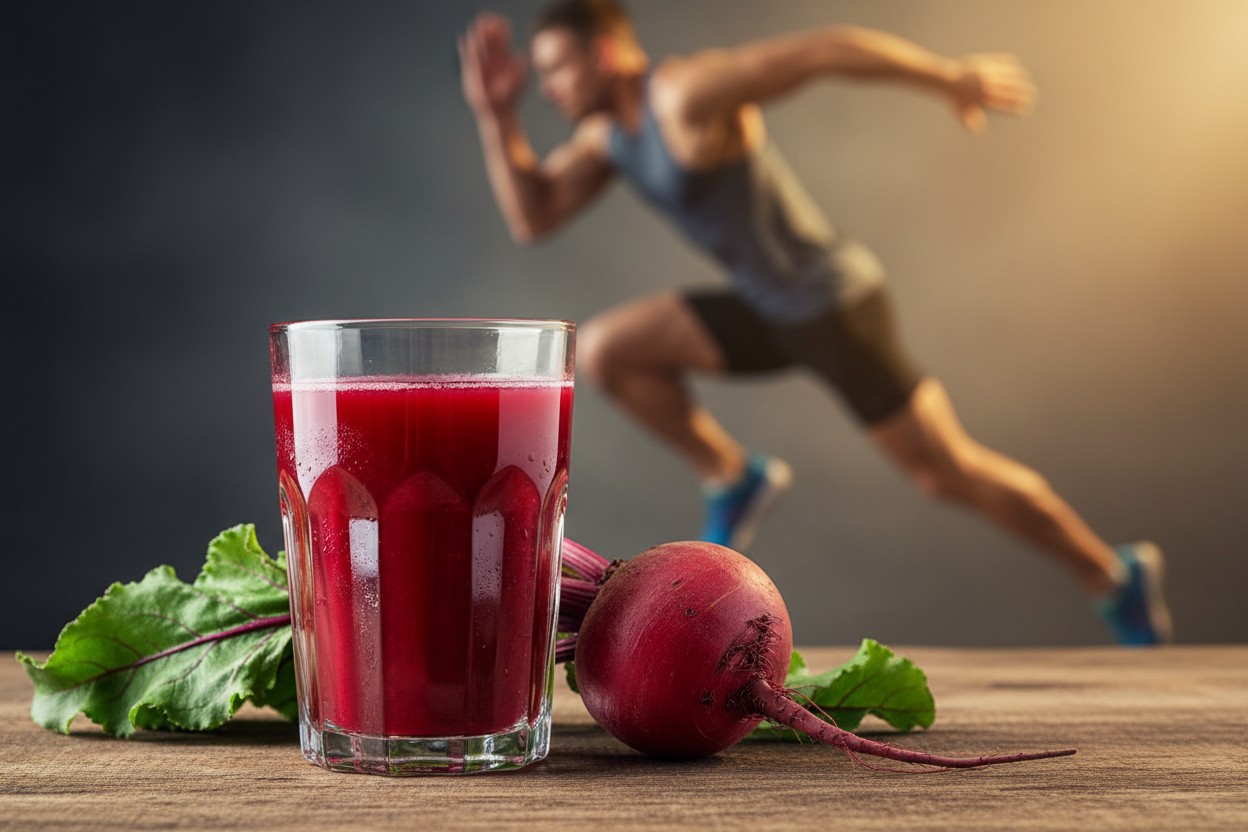
Beetroot Juice and Exercise Performance
A recent meta-analysis of 33 randomized controlled trials involving 519 participants has examined the effects of beetroot juice on exercise performance, according to a report on mindbodygreen. The analysis, published in Frontiers in Nutrition, measured sprint performance, mean power output, and aerobic capacity (VO₂max) across amateur and professional athletes. Beetroot juice contains dietary nitrate, which the body converts to nitric oxide, a molecule that dilates blood vessels and improves energy production efficiency, according to Spano, Kruskall, and Thomas in "Nutrition for Sport Exercise and Health" [1]. Marc Bubbs noted in "Peak" that inorganic nitrates from beetroots are converted to nitrite, and when oxygen levels are low during exercise, nitrites convert to nitric oxide, a potent vasodilator [2]. Studies have shown that beets contain plant pigments and phytochemicals with science-backed abilities to boost athletic performance [3].Study Findings
The meta-analysis reported that sprint performance improved significantly, with the strongest effect observed in amateur athletes and those participating in team or individual sports, the mindbodygreen report stated. Mean power output also showed significant improvement, particularly in single-dose protocols and among team sport athletes. Aerobic capacity, measured by VO₂max, demonstrated a smaller but statistically significant improvement, indicating support for both explosive and endurance efforts. Previous research has found that beetroot juice "significantly increases muscle force during exercise," according to a study published in Acta Physiologica [4]. Nitrate-rich beetroot juice has also been identified as a superfood that improves oxygen flow and delays fatigue, enhancing endurance [5]. Lance D Johnson of NaturalNews reported that beetroot strengthens heart health and athletic performance [6].Variables Affecting Results
Training level influenced outcomes, according to the analysis. Amateur athletes showed greater gains in sprint performance, while professional athletes exhibited more significant improvements in aerobic capacity. Sport type may also shape results, with athletes in sports involving repeated sprints or power bursts -- such as cycling, soccer, and rowing -- potentially benefiting more, researchers said. Supplementation protocol affected outcomes as well. Single-dose protocols improved power output, while multi-day supplementation showed varied effects. The nitrate-nitrite-NO pathway is particularly active during high-intensity exercise when oxygen is less available, as noted in "Nutrition for Sport Exercise and Health" [1]. This mechanism explains why beetroot juice may be most effective for power-based activities.Usage Recommendations
Timing is a key factor. Consumption 2 to 2.5 hours before a workout produced significant effects, but not at 3 hours, based on the broader research literature, the study noted. Dosage recommendations suggest 300 to 600 milligrams of dietary nitrate, typically 70 to 140 milliliters of concentrated juice, though these ranges are not from the meta-analysis itself, according to the mindbodygreen report. Beetroot juice and concentrated shots are the most studied forms; powders and capsules vary in nitrate delivery. A single pre-workout dose can be effective, but daily use over days or weeks may compound benefits. Beetroot juice can temporarily turn stool pink or red, and those on blood pressure medication should consult a doctor due to its mild blood pressure-lowering effect. Beetroot juice significantly reduces systolic and diastolic blood pressure, benefiting those with hypertension [5].Conclusion
The meta-analysis provides evidence that beetroot juice consistently improves sprint performance, power output, and aerobic capacity during high-intensity efforts, according to researchers. The strongest effects were seen in high-intensity efforts across varied athlete populations. Further research is needed to optimize protocols for different sports and training levels, the authors concluded. As noted by NaturalNews.com, beetroots contain unique compounds that can help fight oxidative stress and inflammation, potentially reducing fatigue and boosting energy levels [3]. The humble root vegetable, once relegated to sidelines, has emerged as a nutritional powerhouse backed by rigorous science showing its ability to enhance cardiovascular health and athletic performance [6].References
- Spano, Marie, Kruskall, Laura, and Thomas, D. Travis. "Nutrition for Sport Exercise and Health."
- Marc Bubbs. "Peak."
- NaturalNews.com. "Study: Betalains in beets can help reduce fatigue and boost athletic performance." April 15, 2024.
- NaturalNews.com. "Beetroot juice found to significantly increase muscle force during exercise." January 27, 2023.
- Evangelyn Rodriguez. "Beet juice: A superfood for boosting heart health and physical performance." NaturalNews.com. June 14, 2025.
- Lance D Johnson. "Beetroot strengthens heart health improving blood pressure and athletic performance." NaturalNews.com. July 19, 2025.
Explainer Infographic

Nutrition Tips to Fall Asleep Faster: Evidence and Expert Advice
By Coco Somers // Share
Vitamin K Found to Regulate Bone Remodeling Process, Study Says
By Coco Somers // Share
Study: Microplastics in Blood Linked to Severe Heart Attacks
By Morgan S. Verity // Share
Lymphatic System Dysfunction Linked to Chronic Disease, Researchers Report
By Coco Somers // Share
The hidden power of prebiotics: Why your gut’s unsung heroes deserve a spotlight
By Patrick Lewis // Share

Labor Department Suspends Eight Companies From Green Card Program
By edisonreed // Share

Reuters/Ipsos Poll: Trump Voters Show Lower Enthusiasm for Midterm Elections
By garrisonvance // Share

Trump Pledge on Iran Strikes Fails to Soothe Oil Markets
By sterlingashworth // Share

AI Chip Stocks Fall After Report on OpenAI Revenue Shortfall
By sterlingashworth // Share

EPA Proposes Rollback of Methane Rules for Oil and Gas Industry
By ivagreene // Share

Review Links Insomnia to 26% Higher Relative Risk of Stroke
By morganverity // Share