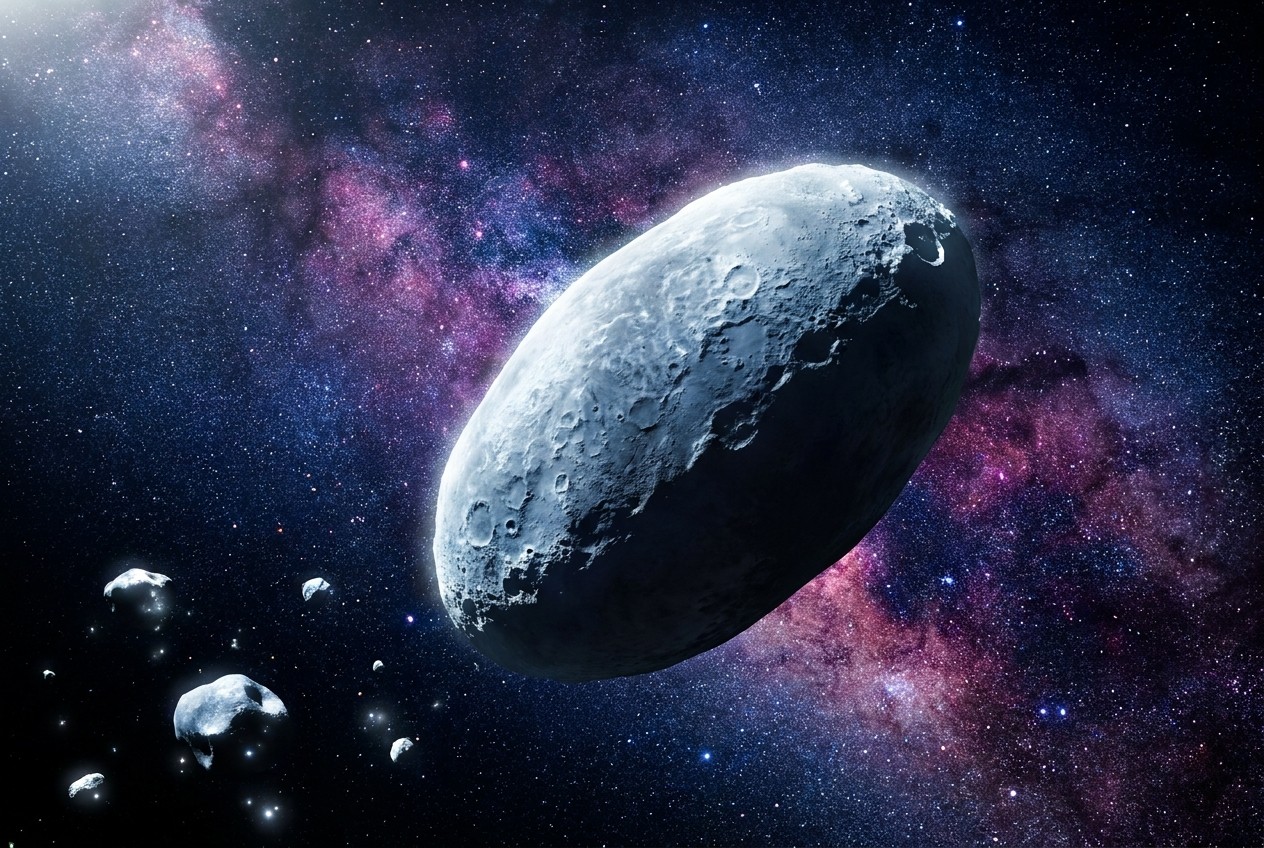
Discovery Details and Object Characteristics
The team traced 2026 ED138 through 30 detections across 20 nights of Rubin observations between March 4 and July 11, 2026. The object's brightness and size estimates suggest that, if it is on the larger end of the range, it could rank alongside recognized dwarf planets such as Makemake and Haumea. The Kuiper Belt, where 2026 ED138 resides, extends from about 30 to 55 AU from the Sun. Beyond it lies the theoretical Oort Cloud, a distant shell of icy bodies that encircles the solar system [4][5]. The discovery adds to the thousands of trans-Neptunian objects already cataloged. The Kuiper Belt was named for Dutch American astronomer Gerard Kuiper, who in 1951 suggested a collection of bodies beyond Pluto, though the belt now known by his name differs from his original proposal [4]. Objects in this region are remnants from the solar system's formation, and studying them offers clues about its early history [6].Orbital Quirks and Detection Challenges
This high inclination means the object spends most of its time outside the narrow band of sky that traditional surveys routinely monitor. The discovery demonstrates the Rubin Observatory's ability to repeatedly scan large swaths of the sky and identify faint, slow-moving bodies that earlier surveys missed. This wide-field capability, combined with repeated imaging, allows astronomers to track objects over time and calculate their orbits. The existence of a hypothetical Planet Nine, a world about 10 times Earth's mass orbiting far beyond Neptune, has been debated for years, with some studies predicting its discovery within 10 to 15 years [7][8]. The new object's orbit could provide additional data for those investigations.Conclusion
The finding adds to the thousands of trans-Neptunian objects already known and suggests more remain undiscovered in the distant reaches of the solar system. The discovery highlights the capability of the Rubin Observatory's large camera. The object's provisional designation, 2026 ED138, indicates it was discovered in 2026. Further observations will be needed to confirm its size, shape, and orbital characteristics.References
- NSF–DOE Vera C. Rubin Observatory Reveals Its First .... https://rubinobservatory.org/news/rubin-first-dwarf-planet-candidate
- Rubin Observatory reveals its first dwarf planet candidate in our solar .... https://www.washington.edu/news/2026/10/27/rubin-observatory-new-dwarf-planet-candidate/
- New dwarf planet candidate discovered in our solar system | CNN. https://www.cnn.com/2026/10/28/science/ed138-dwarf-planet-candidate-beyond-pluto
- NearEarth Objects Finding Them Before They Find Us. Donald K Yeomans
- Comets Visitors from Deep Space. by David J Eicher
- Astronomers investigate the relic of the primordial solar system - NaturalNews.com, June 19, 2018.
- Our solar system may have 9 planets again in a decade or so astronomers say - NaturalNews.com, September 04, 2019.
- Astronomers are still searching for the mysterious PLANET X - NaturalNews.com, January 25, 2023.
Explainer Infographic


U.S. Researchers Report Bayesian Method Detects Radioactivity From 100 Feet in Seconds
By Edison Reed // Share

Five Low-Impact Exercises Recommended for Knee Pain
By Petra Stone // Share

Study Links Three or More Social Activities to Better Cognitive Scores in Older Adults
By Coco Somers // Share
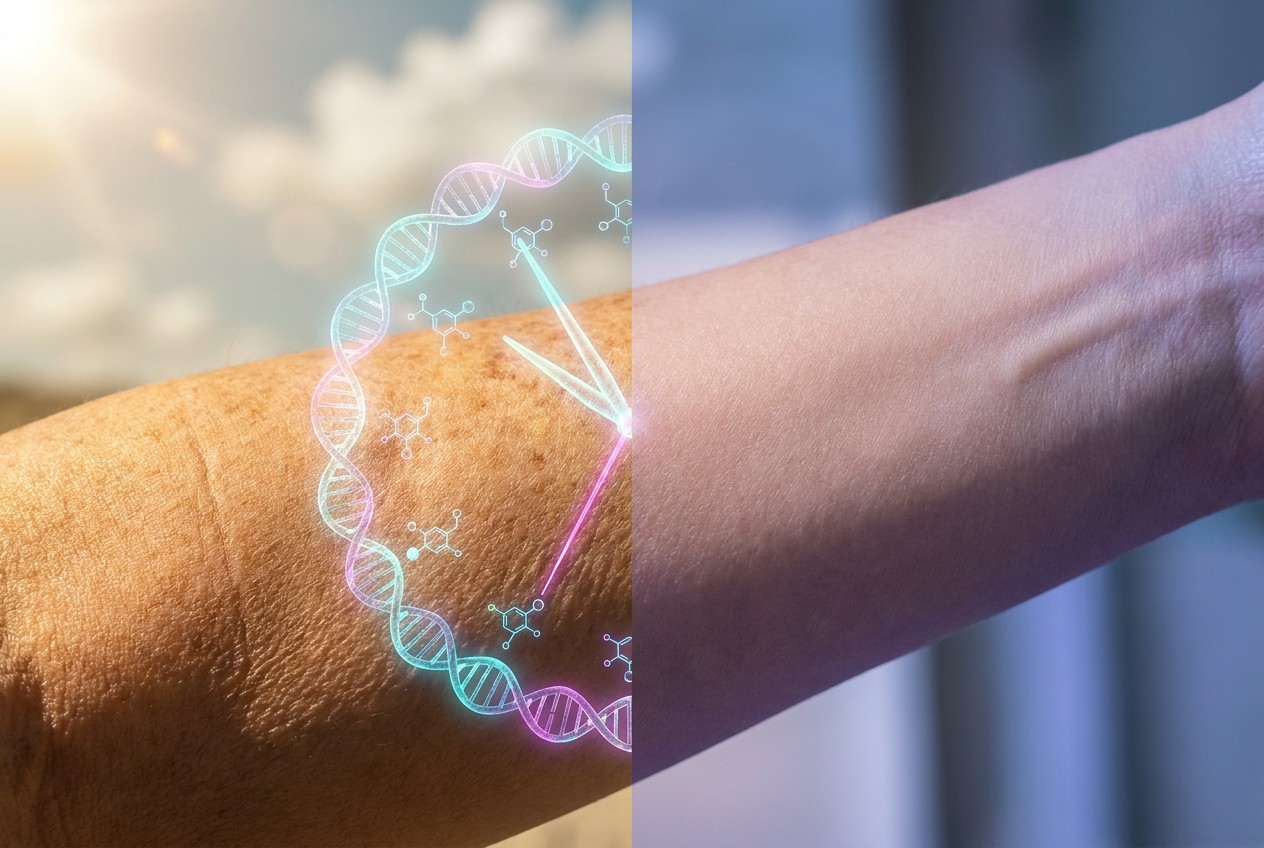
Study Reports Skin-Specific DNA Methylation Clock; Sun-Exposed Areas Show Faster Aging
By Chase Codewell // Share

More Miles, Fewer Calories Burned: Study Shows Surprising Energy Compensation in Female Runners
By Edison Reed // Share

Coconut butter: The whole-food superfat that heals from brain to gut
By Willow Tohi // Share


Critics Say Carbon Pricing Models Miss Rural and Industrial Realities
By sterlingashworth // Share
U.S. Researchers Report Bayesian Method Detects Radioactivity From 100 Feet in Seconds
By edisonreed // Share
Five Low-Impact Exercises Recommended for Knee Pain
By petrastone // Share
New Dwarf Planet Candidate Discovered by Rubin Observatory, Researchers Say
By edisonreed // Share