Silent plaque: Study finds 1 in 13 young adults already have clogged arteries
By willowt // 2026-11-10
Tweet
Share
Copy
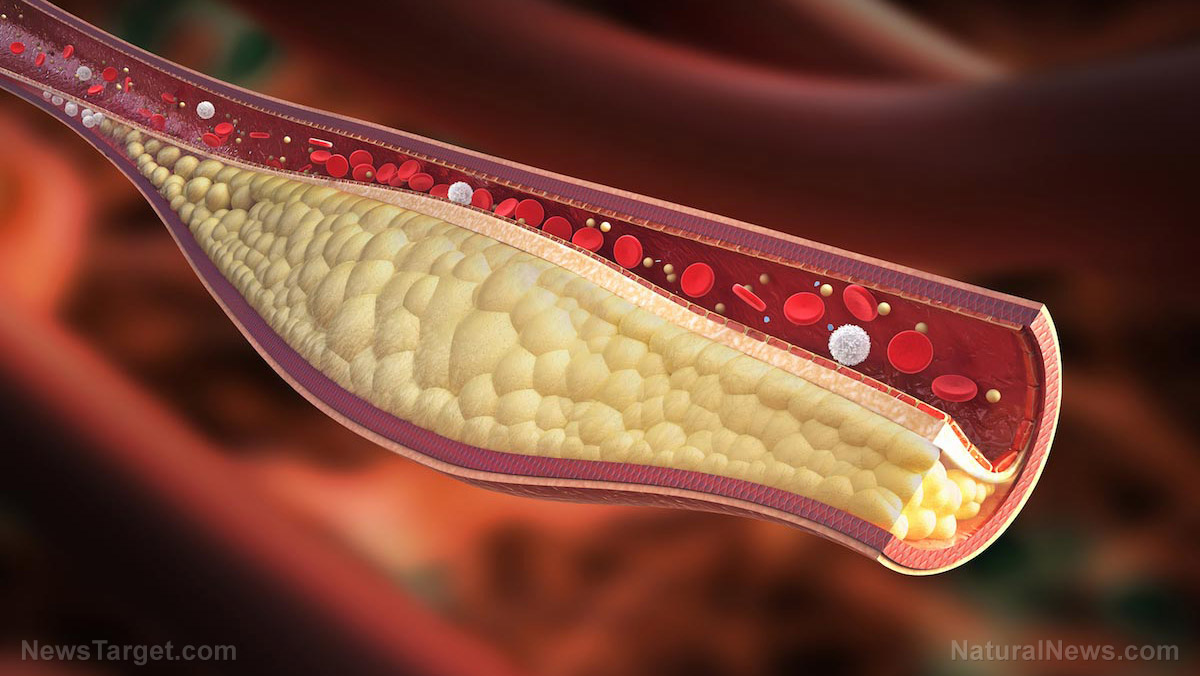
- A major international study found that 57.1% of 16,808 apparently healthy adults have hidden artery plaque, including about 1 in 13 people between ages 18 and 29.
- Standard heart risk scores based on cholesterol, blood pressure and smoking failed to identify most people who already had atherosclerosis.
- Ultrasound imaging of neck and leg arteries detected most cases, offering a noninvasive, radiation-free screening alternative to CT scans.
- Women experience a sharp rise in plaque accumulation between ages 40 and 60, coinciding with menopausal transition.
- Researchers are planning a large clinical trial to test whether imaging-guided preventive care can reduce heart attacks and strokes better than current methods.
The surprising scale of hidden disease
The REACT study, funded by the Novo Nordisk Foundation at up to EUR 23 million, used three-dimensional vascular ultrasound and coronary CT angiography to scan three major artery territories: the carotid arteries in the neck, the femoral arteries in the legs, and the coronary arteries feeding the heart. Overall, 57.1% of participants carried plaque in at least one of these areas. Among participants ages 60 to 70, the prevalence reached approximately 90%. In the youngest age stratum of 18 to 29, 8.7% of men and 6.7% of women already showed signs of atherosclerosis. This challenges the long-held assumption that artery disease is primarily a condition of middle-aged and older adults.Why standard risk scores are failing
One of the study’s most consequential findings involved the inadequacy of conventional risk assessment tools. Current methods, including the SCORE2 risk calculator that uses age, blood pressure, cholesterol and smoking status, identified only a small proportion of people who already had silent plaque. This blind spot means a person can receive a reassuring risk score while plaque is quietly accumulating inside their arteries. The pattern mirrors findings from earlier CNIC research, which tied atherosclerosis in middle-aged adults to lifestyle habits such as diet, physical activity and sleep quality.Sex differences and the midlife warning for women
Men developed plaque five to 10 years earlier than women, but women experienced their steepest increase between ages 40 and 60 – a window that overlaps with the menopausal transition. This suggests that women who felt protected during their 30s should pay closer attention to artery health during midlife. In younger participants, plaque was most often confined to the neck or leg arteries rather than the heart. Because most people with coronary plaque also showed plaque in the peripheral arteries, ultrasound of the neck and legs offers a quick, painless, radiation-free screening option for early detection.A hopeful path forward
The study’s authors emphasized that the findings should be viewed as encouraging rather than alarming. In younger adults, plaque tended to be small and limited to a single artery. The exponential increase in plaque volume and multi-arterial involvement occurred over later decades, pointing to early adulthood and midlife as the most promising windows for intervention. Researchers are now planning REACT-PROTECT, a large randomized clinical trial scheduled for 2027 to 2032, to test whether imaging-guided prevention can slow or reverse atherosclerosis progression and ultimately prevent heart attacks and strokes more effectively than current risk-based approaches. The team is also extending the study to populations in India, Singapore, Tanzania and Mexico.A call for earlier action
The REACT study confirms that atherosclerosis can be detected decades before symptoms appear, and that traditional risk estimates are insufficient to identify those who need intervention. For the 1 in 13 young adults already carrying hidden plaque, the message is clear: heart health begins long before middle age. Simple choices around nutrition, movement and avoiding tobacco carry real weight in the 20s and 30s. As CNIC Scientific Director Dr. Borja Ibáñez stated at the Congress, the future of cardiovascular prevention must become more precise and personalized. Detecting the disease directly – rather than estimating its probability – may be the key to reducing the global burden of the world’s leading cause of death. Sources for this article include: NaturalHealth 365.com NEJM.org ScienceDaily.comTweet
Share
Copy
Tagged Under:
heart disease men's health women's health research brain health stroke heart attack heart health atherosclerosis dangerous discoveries badscience badhealth real investigations health science brain damaged clogged arteries
You Might Also Like


China Reports Record $583 Billion Research Budget as U.S. Weighs Science Cuts
By Edison Reed // Share

Study Examines Whether Nighttime Breathing Instability Is Linked to Heart Disease Risk
By Iva Greene // Share

Nvidia investigates Chinese spy claims after CEO Jensen Huang admits affair
By Cassie B. // Share
Recent News


Marco Rubio Just Admitted the U.S. Lost the War with Iran
By healthranger // Share

Silent plaque: Study finds 1 in 13 young adults already have clogged arteries
By willowt // Share

Texas Democrats File 23 Gun Control Bills Following Midterm Victories
By douglasharrington // Share

Japan Unveils $63 Million Emergency Cybersecurity Package Amid Surge in AI-Driven Hacking Attacks
By chasecodewell // Share