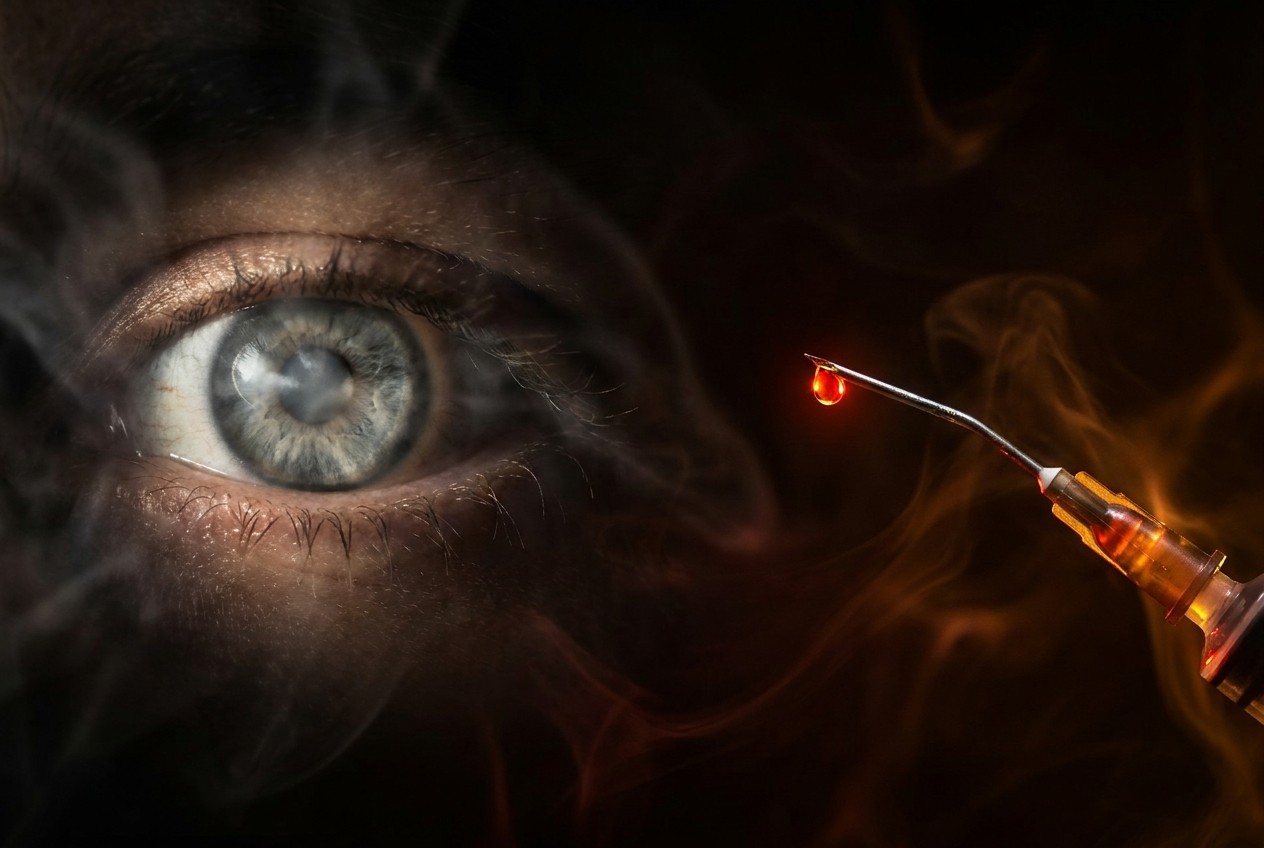
FDA Finally Admits GLP-1 Drugs Can Cause Blindness: I've Been Warning About These Weight-Loss Shortcuts for Years
I have spent years warning that GLP-1 injectables like Ozempic, Wegovy, Mounjaro, Zepbound and Soliqua are not miracle drugs but risky shortcuts that trade long-term health for short-term vanity. I have advocated instead for smarter approaches to managing one's weight -- regular exercise, healthier food choices, and a diet rich in superfoods like smoothies [1]. Now, the U.S. Food and Drug Administration has finally been forced to admit what independent researchers and alternative health advocates have been saying all along: these blockbuster injections can cause sudden, irreversible blindness. The FDA's November 9 safety labeling change requires makers of every GLP-1 drug on the U.S. market -- Ozempic, Wegovy, Mounjaro and Zepbound among them -- to warn of a potential increased risk of an "eye stroke" that can cause sudden, permanent vision loss in one eye [2]. The condition is non-arteritic anterior ischemic optic neuropathy, or NAION [2]. This is a rare admission from an agency that usually protects drug-company profits, and it matters because patients deserve to know the truth before they inject themselves with these chemicals. Trading your eyesight for convenience is a terrible bargain. In my view, this moment demands a serious national conversation about diet, lifestyle, and personal responsibility -- not another injection. The FDA's own warning label now admits these drugs can lead to permanent vision loss, a fact that should give every American pause before their next dose.What the FDA Warning Actually Says
The FDA's safety communication puts the NAION warning directly in the Warnings and Precautions section of GLP-1 labeling [2]. The new language warns doctors of a rare eye condition that can cause loss of vision, and the agency says the problem can be permanent and is not treatable [3]. Symptoms include blurred vision, blind spots or color changes [4]. The FDA reviewed an extensive body of clinical trial data involving over 134,000 patients across 126 trials, and found 6.4 cases of blindness per 100,000 person-years -- about double the rate seen in patients taking placebo or other glucose-lowering medications. The absolute risk may still look small when expressed per 100,000 patients, but the relative risk is what triggered the FDA action. The agency did not issue this warning lightly. European regulators had already confirmed the risk, and the European Medicines Agency confirmed that Ozempic and Wegovy double the risk of NAION [5]. Because these drugs are relatively new, the long-term risks remain unknown. By mass-prescribing these drugs, we are conducting a mass experiment on the American public, and the results are now appearing in emergency rooms, ophthalmology clinics, and courtrooms. I believe this is a rare admission from an agency that usually protects drug-company profits, and it matters because patients deserve to know the truth before they inject themselves. The warning label is not a suggestion -- it is a legal acknowledgment that these drugs can steal your sight.The Manufacturer's Own Label Already Admitted Serious Risks
Novo Nordisk says it continues to believe the data do not establish cause and effect, but Ozempic's own safety information lists thyroid tumors, pancreatitis, vision changes, kidney problems, gallbladder problems, severe stomach problems and allergic reactions. According to the Ozempic website, the most common side effects include nausea, vomiting, diarrhea, stomach pain and constipation -- so the promise of easy weight loss comes with misery even before blindness is considered. This is not a side effect profile of a harmless wellness product; it is a list of serious medical dangers that remain a risk for users of the drug. The FDA has accused Novo Nordisk of "serious violations" for failing to report severe and fatal side effects, including strokes, suicidal ideation and patient deaths, linked to its popular diabetes and weight-loss drugs Ozempic, Wegovy and Saxenda [6]. The formal warning letter, issued on March 5, reveals systemic failures in the company's safety monitoring, raising urgent questions about the transparency and reliability of the manufacturer's safety claims [6]. If the manufacturer cannot even be trusted to report strokes and deaths in a timely manner, why should anyone trust its assurances that blindness is merely coincidental? In 2025, one in eight Americans was using GLP-1 receptor agonist drugs like Ozempic, Wegovy and Mounjaro, medications marketed as revolutionary solutions for obesity and diabetes. But emerging evidence reveals a dangerous tradeoff: According to media reports, these drugs may in some cases strip the body of biologically critical muscle tissue alongside fat, leaving patients vulnerable to bone fractures, infection and premature death [7]. If the manufacturer admits these risks on its own website, I have to ask why millions of Americans still treat these injections like harmless wellness products. The FDA warning is significant precisely because the agency is so often captured by Big Pharma; when it issues a red alert, people should listen.This Is Not About All Peptides Being Bad
I reject the lazy argument that peptides are either all good or all bad. That is like saying all molecules are good or bad, which is nonsensical. Your body makes therapeutic peptides, and I have personally used BPC-157 intranasally to help heal old scar tissue and get back to exercising, so I know peptides can be beneficial [8]. For the past thirty months, I have been able to resume strength and endurance training -- a feat made possible by a natural peptide called BPC-157 [8]. This experimental compound, which is not FDA-approved, can be administered orally or via nasal spray [8]. But injected GLP-1 drugs are not the same as natural peptides taken orally. They come with preservatives, chemical buffers and other ingredients that your body does not make or recognize as natural. Researchers such as Dr. Peter McCullough, who has extensively examined these materials, have noted that the prescription versions of peptides -- such as semaglutide -- contain additional chemical backbones and toxic signatures that are absent in the pure peptide form [9]. These additives are what classify the substance as a prescription medication, introducing a complex chemical profile that differs fundamentally from the naturally occurring peptide [9]. The real problem is the shortcut mentality. People want to keep eating processed junk and avoid exercise, then inject a drug instead of changing their lives. The answer is not another injection but auditing your diet, removing junk food, seed oils, MSG, artificial sweeteners and refined carbohydrates, and committing to real fitness. I will never inject GLP-1 drugs because I need my eyes, kidneys, pancreas and digestive system, and I believe you should not gamble with yours either.Why Blindness Happens: Sludge Blood and Poor Nutrition
NAION is essentially an eye stroke caused by disrupted blood flow to the optic nerve. The optic nerve is exquisitely sensitive to oxygen deprivation, and when blood flow is compromised -- whether by vascular disease, inflammation, or metabolic dysfunction -- the result can be permanent blindness. I believe the people suffering these injuries likely had poor nutrition and unhealthy blood to begin with, by the way. Processed foods, seed oils, refined carbohydrates and inflammation create what I call sludge blood, and that poor circulation can set the stage for ischemic damage. Healthy blood flow is not a pill you take after the damage is done; it is built through clean food, exercise, and avoiding the toxic industrial diet that Big Food and Big Pharma profit from. This is why I take plant-based Ahiflower oil and high-potency omega-3 fish oil, and why I urge people to support their cardiovascular and neurological health naturally rather than injecting risky drugs. The body has an innate capacity to heal and regulate itself when given the proper raw materials -- clean water, nutrient-dense food, sunlight, and movement. The FDA's warning comes after a spate of lawsuits and studies said the medications may cause some patients to go blind [10]. Dozens of lawsuits claim the drugs led to vision loss [11]. This is not a theoretical risk. Real people are waking up blind after injecting these drugs. When the body is already compromised by poor nutrition and metabolic dysfunction, the additional burden of a powerful synthetic hormone can tip the optic nerve into irreversible damage.Don't Trade Your Eyesight for a Shortcut
If you are on a GLP-1 drug, I urge you to reconsider and talk to a trusted natural-health practitioner about safer alternatives. The answer is not another injection but auditing your diet, removing junk food, seed oils, MSG, artificial sweeteners and refined carbohydrates, and committing to real fitness. The FDA now agrees with warnings I have been making for years; use this moment to choose self-reliance, clean nutrition and personal responsibility over a dangerous shortcut. We are seeing a high failure rate in conventional medicine because it treats symptoms rather than root causes [12]. A toxic body is more prevalent in cases of cancer, autoimmune disease, chronic pain, and energy drain [12]. This toxicity disrupts sleep, preventing the body from repairing itself and producing human growth hormone during rest [12]. This cluster of symptoms points to a common denominator: a compromised biological terrain [12]. The solution is not more drugs but a fundamental shift toward natural health and self-responsibility. I will never inject GLP-1 drugs because I need my eyes, kidneys, pancreas and digestive system, and I believe you should not gamble with yours either. The FDA warning is a gift -- a moment of clarity in a sea of pharmaceutical propaganda. Choose self-reliance, clean nutrition and personal responsibility over a dangerous shortcut that can steal your sight forever.References
- Health Ranger Report - GLP 1 EXPLODING COLONS - Mike Adams - BrightVideos.com, January 30, 2026. by Mike Adams - BrightVideos.com
- "Consider Discontinuing": FDA Slaps "Eye Stroke" Warning On All GLP-1 Weight-Loss Drugs. 2026-11-10T02:20:00.000Z. https://www.zerohedge.com/medical/consider-discontinuing-fda-slaps-eye-stroke-warning-all-glp-1-weight-loss-drugs
- FDA adds rare vision-loss warning to popular GLP-1 drugs. 2026-11-09T21:28:51Z. https://www.facebook.com/KSTPTV/posts/the-food-and-drug-administration-is-adding-a-new-warning-about-possible-rare-cas/1562428825916226/
- FDA adds rare vision-loss warning to GLP-1 drugs like .... 2026-11-10T01:28:51Z. https://www.facebook.com/WJXT4TheLocalStation/posts/fda-adds-rare-vision-loss-warning-to-glp-1-drugs-like-ozempic-wegovy-mounjaro-ne/1563608372460246/
- Weight loss drugs like Ozempic and Wegovy linked to sudden blindness - NaturalNews.com, February 09, 2026. by NaturalNews.com
- FDA rebukes Novo Nordisk for failing to report strokes, suicides and deaths linked to Ozempic, Wegovy. 2026-03-28T06:00:00.000Z. https://www.naturalnews.com/2026-03-28-nordisk-failing-to-report-side-effects-ozempic.html
- GLP-1 weight loss drugs preserve fat but sacrifice muscle: New trial reveals life-threatening tradeoff. 2026-06-11T06:00:00.000Z. https://www.naturalnews.com/2026-06-11-glp1-weight-loss-drugs-preserve-fat-sacrifice-muscle.html
- Bright Videos News - with Diane Kazer - Mike Adams - BrightVideos.com, April 16, 2026. by Mike Adams - BrightVideos.com
- Bright Videos News - DEFEAT of ChatGPT - Mike Adams - BrightVideos.com, January 22, 2026. by Mike Adams - BrightVideos.com
- Do GLP-1s cause vision loss? Explaining new FDA warning. 2026-11-09T21:28:51Z. https://www.usatoday.com/story/news/health/2026/11/09/glp-1-vision-loss-new-fda-warning-label/92694486007/
- What GLP-1 users should know about the potential risk of a .... 2026-09-21T00:00:00Z. https://abcnews.com/US/glp-1-users-potential-risk-rare-type-vision/story?id=136635318
- Bright Videos News - Interview with Diane Kazer - Mike Adams - BrightVideos.com, January 22, 2026. by Mike Adams - BrightVideos.com
Explainer Infographic


Silent plaque: Study finds 1 in 13 young adults already have clogged arteries
By Willow Tohi // Share
Common Food Preservative Propyl Paraben Draws Scrutiny Over Side Effects
By Zoey Sky // Share
Study Examines Whether Nighttime Breathing Instability Is Linked to Heart Disease Risk
By Iva Greene // Share

Nvidia investigates Chinese spy claims after CEO Jensen Huang admits affair
By Cassie B. // Share

AI dependence linked to sharp decline in cognitive performance, new studies confirm
By Willow Tohi // Share

Marco Rubio Just Admitted the U.S. Lost the War with Iran
By healthranger // Share

Silent plaque: Study finds 1 in 13 young adults already have clogged arteries
By willowt // Share

Texas Democrats File 23 Gun Control Bills Following Midterm Victories
By douglasharrington // Share

Japan Unveils $63 Million Emergency Cybersecurity Package Amid Surge in AI-Driven Hacking Attacks
By chasecodewell // Share